Back to API Bites

Key Takeaways:
- Your enterprise needs strong guardrails for AI agents. Unlike GenAI, agentic systems access data, modify records, and trigger transactions, which makes bolted-on security a recipe for failure.
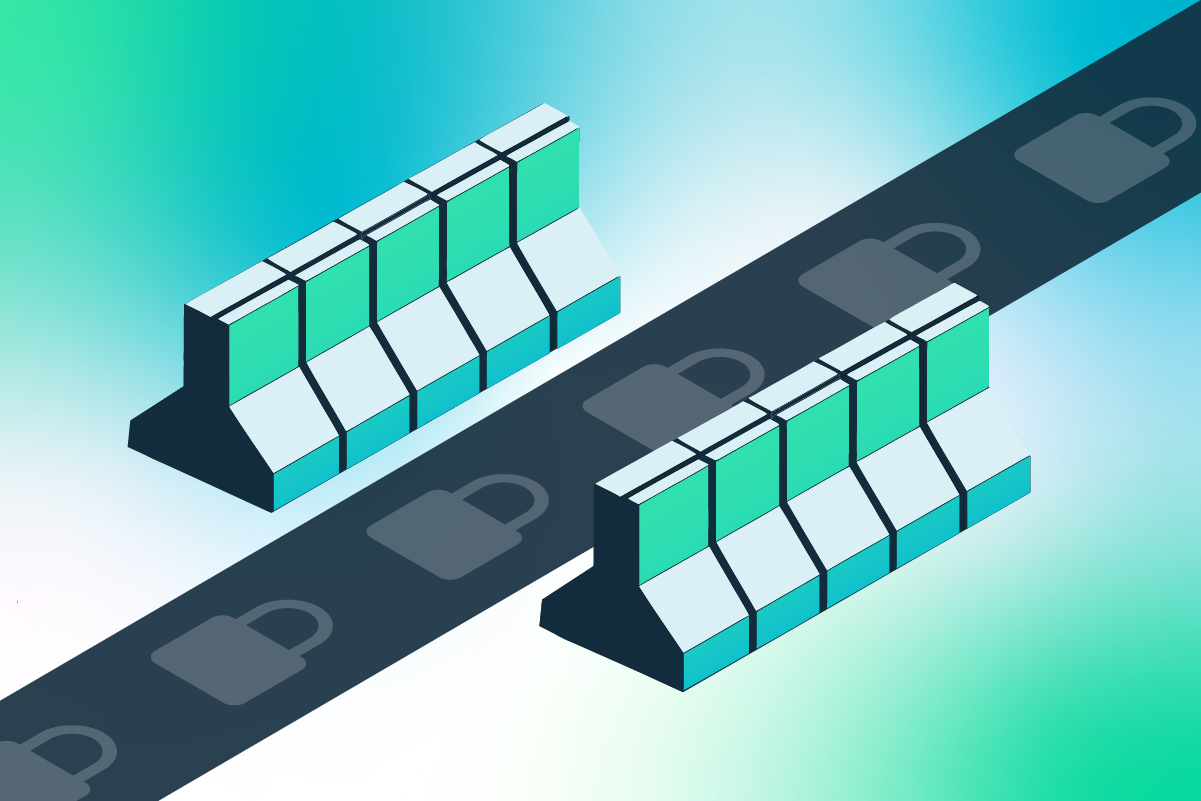
- AI guardrails are the foundation, not a feature. Identity scoping, behavioral monitoring, and runtime enforcement need to be embedded at the architecture layer, not added after going to production.
- Without guardrails, AI agents scale risk as fast as productivity. The AI Gateway sits between agents and backend systems, ensuring that agentic AI is predictable, explainable, auditable, and controllable.
Agentic AI represents a fundamental shift in how enterprises employ artificial intelligence. We are moving from passive assistants that generate content to autonomous systems that plan, reason, call APIs, and execute workflows. Organizations are investing in agentic AI for two clear business reasons.
Internal Productivity
Leaders want to automate repetitive knowledge work, accelerate DevOps and SecOps processes, and remove operational bottlenecks.
Company Growth
Companies are modernizing products, embedding AI into customer experiences, and racing to move from pilots to production-grade AI systems.
Agentic AI promises both efficiency and competitive advantage, but there is a hard reality beneath the momentum: autonomous systems without guardrails introduce unacceptable risk. Agentic AI is powerful because it can act, and these systems require guardrails.
Why Agentic AI Changes the Security Model
Traditional generative AI and LLM assistants generated output based on prompts. Agentic AI systems execute decisions. They access sensitive data, modify records, initiate transactions, and coordinate across applications. AI agents operate at machine speed, often with persistent context and dynamic reasoning. Without constraints, they can become over-permissioned, trigger workflows unintentionally, or access data outside intended boundaries. Because they interact via APIs and can mimic legitimate traffic patterns, traditional “human vs. machine” security models fail.
The risk categories are no longer theoretical. Enterprises face:
- Over-permissioned agents accessing sensitive data
- Rogue or untrusted MCP servers creating hidden backdoors
- Business logic abuse that appears indistinguishable from normal API traffic
- Non-deterministic behavior that exceeds defined authority
The issue is not whether AI agents are inherently malicious; it’s that autonomy amplifies impact. Without guardrails, mistakes and abuse scale just as efficiently as productivity gains. Security guardrails determine which outcome dominates.
What Security Guardrails Mean in the Agentic Era
In the context of agentic AI, guardrails are enforceable, infrastructure-level controls that constrain what systems and data agents can access, execute, and modify. They are enforcement mechanisms that constrain at runtime.
Identity and Permissions
Guardrails begin with identity. Every AI agent must be treated as a first-class identity with authenticated, scoped access. This typically requires standards-based authentication, continuous authorization aligned with Zero Trust principles, and tightly defined permissions. Over-permissioned agents represent one of the greatest risks in autonomous systems.
APIs are the Communication Tissue for AI
Because every agent action flows through APIs, they are the appropriate mechanism for enforcement. Guardrails here ensure that policies are applied before actions reach backend systems. Effective API-level guardrails include:
- Endpoint-level access control tied to agent identity
- Appropriate tool restrictions
- Context-aware policy enforcement
- Behavioral thresholds that limit abnormal activity
MCP Server Governance
AI guardrails must also extend to Model Context Protocol (MCP) infrastructure. As MCP becomes the translation mechanism between agents and enterprise applications, untrusted servers introduce significant risk. Enterprises need:
- A vetted registry of trusted MCP servers
- Policy enforcement governing server creation and usage
- Monitoring and logging of user and agentic AI access of applications and data
Runtime Guardrails
Finally, guardrails must operate dynamically at runtime. Agentic systems are non-deterministic; they may attempt unexpected actions in pursuit of a goal. Runtime enforcement mechanisms should:
- Throttle or block high-risk behavior
- Escalate uncertain or anomalous activity to human review
Why Guardrails Must Be Built In for Governance
A common failure pattern in agentic AI adoption is rapid experimentation followed by delayed security integration. Teams connect agents to real systems, then attempt to retrofit controls later. In production environments, this approach fails. Without embedded guardrails, organizations experience limited visibility into agent behavior, reactive detection instead of proactive enforcement, and inconsistent implementations across teams. Security teams cannot explain or defend AI-driven actions. As a result, promising pilots stall before reaching production. Guardrails are not optional enhancements. They are the architectural foundation that makes agentic AI deployable at enterprise scale.
How Cequence Delivers Built-In Guardrails for Agentic AI
Cequence approaches agentic AI from the core principle that enablement, security, and guardrails are inseparable. The Cequence AI Gateway operates between AI agents and enterprise applications and data, translating, authenticating, and monitoring every agent request before it reaches backend systems. This architectural placement and our experience with user and entity behavior enables consistent enforcement without requiring application modification.
Cequence embeds multiple guardrails directly into AI enablement:
- Identity guardrails that ensure every agent action is tied to a verified, scoped identity through standards-based authentication and authorization, such as OAuth 2.1
- Trusted MCP registry with vetted MCP servers
- Behavioral guardrails that detect business logic abuse and anomalous API usage patterns
- Runtime enforcement that can throttle, block, or escalate high-risk actions automatically
Rather than relying on outdated models that attempt to differentiate humans from machines, Cequence focuses on behavioral intent, allowing legitimate automation while stopping abuse and rogue activity. This approach secures the connections between AI agents, APIs, applications, and data in the agentic era.
Guardrails Help Make AI Enterprise-Ready
Agentic AI is ready to deliver productivity gains and growth acceleration. But autonomous execution without guardrails is unmanaged risk.
Security guardrails make agentic AI:
- Predictable
- Explainable
- Auditable
- Controllable
Organizations that build guardrails into their agentic AI infrastructure can move confidently from pilot to production. Those that do not will remain constrained by security concerns.
Contact us to talk about your agentic AI journey and how we can help, or request a personalized demo.