USE CASE

Preventing Unwanted Content Scraping

Protect IP, pricing info, and infrastructure from automated harvesting

Content scraping has evolved from simple scripts extracting HTML to a sophisticated, automated operation targeting web and mobile apps, APIs, and web endpoints. As digital businesses rely more heavily on APIs to deliver data-rich experiences, attackers have shifted their tactics accordingly, exploiting these endpoints to harvest valuable content and data. Understanding how scraping works and its impacts is critical to designing stronger defenses.
A conceptual illustration of unwanted content scraping.
A conceptual illustration depicting the location of bots scraping data.

What is Content Scraping?

Content scraping is the automated extraction of data from websites, apps, or APIs—often without consent. While some scraping is benign, such as search engine crawlers indexing your content, malicious scraping can target:
  • Pricing and product details for unfair competitive advantage
  • Intellectual property and sensitive information
  • User data for fraud and abuse
Today, most structured data resides behind APIs, which means that scraping has shifted from targeting front end HTML pages to exploiting backend endpoints. This evolution turns scraping from a simple front-end nuisance into a direct and complex API security challenge.

How Content Scraping Works

Scraping has moved far beyond sending basic HTTP requests. Modern scraping operations use a combination of advanced, distributed techniques designed to mimic human behavior and evade detection:
1

Headless browsers and automation frameworks

simulate human interaction, load JavaScript, manage cookies, and bypass simple anti-bot defenses
2

API exploitation

from attackers reverse engineer mobile apps or other applications to identify hidden or undocumented APIs and query them directly
3

Residential proxies

enable scrapers to route traffic through massive proxy networks to disguise requests as originating from real users, bypassing IP-based blocking
4

CAPTCHA

bypass via AI-powered solvers and human CAPTCHA farms make traditional access challenges far less effective

How Agentic AI Changes Content Scraping

Agentic AI amplifies scraping into autonomous, adaptive, and highly efficient attacks. Unlike traditional scrapers, AI agents can reason about their environment and adjust tactics instantly—rotating proxies, modifying payloads, and bypassing defenses without human input. This makes rule-based detection far less effective. AI-powered scraping capabilities include:
Icon

Smarter Data Collection

Analyzing and contextualizing scraped data into actionable intelligence in real time

Icon

Human-like Simulation

Generating thousands of realistic browsing patterns to evade behavioral detection

Icon

API Reverse-Engineering

Bypassing anti-bot protections and crafting adaptive payloads tailored to each target

By combining these techniques, agentic AI transforms scraping from a static nuisance into a constantly evolving threat—rendering rate limits, WAF rules, and basic bot detection largely ineffective.
A conceptual illustration of agentic AI transforming the nature of attacks.

Impacts of Content Scraping

Content scraping is the #4 ranked threat in the OWASP API Security Top 10. In a world where APIs and digital content form the foundation of many business models, uncontrolled scraping creates a cascading set of operational, financial, and reputational threats.
Icon

Intellectual Property Theft

Proprietary datasets, curated research, and premium content can be stolen and republished without consent.

Icon

Competitive Price Undercutting

E-commerce competitors scrape product catalogs and pricing APIs to dynamically adjust their prices, eroding margins.

Infrastructure Strain

Excessive scraping drives up API and hosting costs, slows response times, and disrupts legitimate user experiences.

Icon

Fraud Enablement

Scraped data often fuels downstream attacks like credential stuffing, phishing, and account takeover campaigns.
Real-World Examples

LinkedIn

Data from 500 million LinkedIn users was scraped and later a 700 million profile dataset appeared for sale online.

Anthropic/Reddit

Reddit filed a lawsuit against the AI company Anthropic, accusing it of illegally scraping millions of Reddit user comments to train its Claude chatbot without a licensing agreement or user consent.

Dell

Attackers posed as a partner company and used Dell’s partner portal API to scrape approximately 49 million customer records, exposing sensitive personal data.

How Cequence Prevents Content Scraping

Cequence protects against scraping by combining API discovery, behavioral bot detection, and adaptive threat prevention. Unlike traditional WAFs or IP-based blocking, Cequence focuses on behavioral intent-based analysis at the API and bot automation layers, accurately distinguishing legitimate traffic from malicious scraping campaigns.
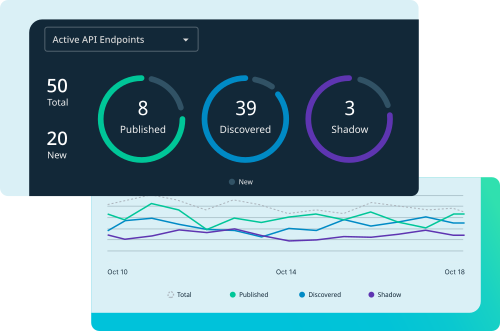
Two screenshots showing discovered risk and sensitive data detected.

API Discovery & Inventory

Cequence automatically discovers all web, mobile, and third-party APIs, providing critical visibility as modern scrapers often bypass the UI and directly scrape undocumented or forgotten endpoints.
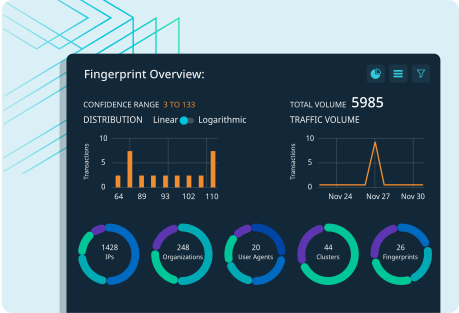
A Cequence dashboard showing Cequence's behavioral fingerprinting of application and API traffic to accurately detect malicious bots.

Behavioral Bot Detection

Cequence uses behavioral fingerprinting rather than relying solely on static indicators like IP addresses or user-agent strings to identify malicious bots.
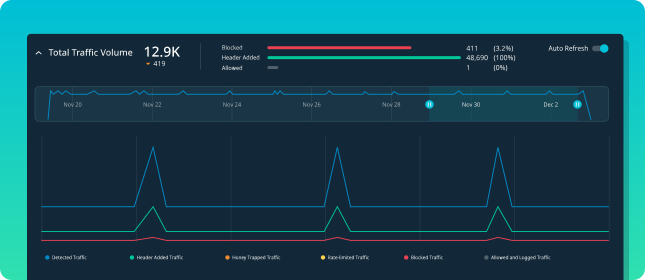
A screenshot of a reporting showing API traffic volume and how malicious traffic was mitigated.

Real-Time Threat Prevention

Cequence’s accurate bot detection allows organizations to block scraping bots with the confidence that legitimate traffic won’t be adversely affected.

Additional Resources

A conceptual illustration of unwanted content scraping.

How to Prevent Web Scraping Attacks and Block Malicious Bots

An illustration depicting the scraping of content being blocked

Why Simple Attacks Like Content Scraping are the Hardest to Block

Find out how Cequence can help your organization.

Cequence Security application and API protection experts will show you how we can help you improve your security posture with a personalized demo. Nothing to deploy. All we need is your email.