What Is Web Application and API Protection (WAAP)?
Web Application and API Protection (WAAP) is a security solution designed to safeguard web applications and APIs from a broad range of cyber threats. WAAP integrates multiple security technologies, such as Web Application Firewalls (WAFs), API security, Distributed Denial of Service (DDoS) protection, and bot mitigation, into a unified platform.
This approach enables organizations to address the complexities of modern web infrastructure, where both web applications and APIs serve as frequent attack vectors. WAAP solutions monitor traffic, detect malicious activity, and block attacks in real time to protect sensitive data and maintain service availability.
When managing high-volume enterprise traffic, Web Application and API Protection (WAAP) products must deliver exceptional threat mitigation without introducing latency or suffering from high false-positive rates.
Web Application and API Protection Solutions at a Glance
The table below summarizes the key differences between the solutions covered in this guide. Each one is explored in more detail in the sections that follow.
| Category | Solution | Best For | Key Strengths | Things to Consider |
|---|---|---|---|---|
| Cloud-Delivered WAAP Platforms | Cequence WAAP | High-volume web and API traffic in one protection tenant | Single-tenant WAF, bot defense, API security, L3/4/7 DDoS | Initial policy tuning takes time |
| Cloud-Delivered WAAP Platforms | Wallarm Cloud-Native WAAP | API-heavy workloads needing inline protection anywhere | Hybrid SaaS nodes, virtual patching, distributed rate limiting | Configuration and tuning take time for new users |
| Cloud-Delivered WAAP Platforms | Radware Cloud Application Protection Services | Hybrid estates wanting a managed protection service | Behavioral policy automation, HTTPS DDoS defense, 24×7 ERT | Reporting flexibility and initial tuning need effort |
| Edge and CDN-Based WAAP Platforms | Akamai App & API Protector | Global high-traffic sites needing edge-first enforcement | Adaptive Security Engine, Behavioral DDoS Engine, hybrid WAF | Config propagation delays; bot tuning needs support time |
| Edge and CDN-Based WAAP Platforms | Cloudflare Application Security | Consolidating WAF, bot, and API defense on one network | Edge enforcement, fast virtual patching, API discovery | Advanced capabilities sit in higher tiers; rule tuning is complex |
| Edge and CDN-Based WAAP Platforms | F5 Web App and API Protection | Hybrid multicloud estates needing one consistent policy set | Coverage across SaaS, NGINX, and BIG-IP enforcement points | Console navigation and custom reporting can be cumbersome |
| Edge and CDN-Based WAAP Platforms | Fastly Next-Gen WAF | High-request-rate apps and APIs needing low-tuning detection | SmartParse detection, NLX threat feed, advanced rate limiting | Interface and rule management can be time-consuming |
| Edge and CDN-Based WAAP Platforms | Imperva Application Security Platform | Large estates wanting WAF, bot, DDoS, and CDN from one vendor | Bot protection, API discovery, DDoS mitigation, integrated CDN | Cost and support response times draw consistent criticism |
Why High-Volume Traffic Changes Security Requirements
High-volume traffic makes it harder to distinguish legitimate requests from malicious activity. Security controls must inspect large numbers of requests without delaying users, blocking valid traffic, or affecting application availability:
- Greater attack surface: More traffic creates more opportunities for attackers to hide malicious requests among normal user activity.
- Higher risk of performance issues: Security tools must analyze requests with minimal latency. Slow inspection can reduce application performance during peak periods.
- More complex DDoS attacks: Large traffic volumes can conceal application-layer DDoS attacks that imitate legitimate user behavior and consume backend resources.
- Increased bot activity: Automated traffic may include credential stuffing, scraping, account creation, inventory abuse, and other actions that require behavioral analysis to detect.
- Faster threat detection: High-volume environments require real-time monitoring and automated responses because manual investigation cannot keep pace with incoming requests.
- Need for scalable protection: Security capacity must expand with traffic demand. Fixed-capacity systems may become overloaded and create gaps during sudden traffic spikes.
- Risk of false positives: Broad blocking rules can disrupt legitimate users at scale. WAAP solutions must use application context, traffic patterns, and risk signals to make accurate decisions.
- Consistent policy enforcement: Traffic may pass through multiple regions, cloud platforms, APIs, and application services. Centralized policies help maintain the same protection across the entire environment.
Related content: Read our article about bot detection in the AI age.
Key Features to Look for in a High-Traffic WAAP Product
1. Scalable Traffic Inspection
A high-traffic WAAP solution must provide scalable traffic inspection to ensure security coverage as demand fluctuates. This means leveraging distributed architectures, cloud-native designs, or elastic scaling features that can automatically handle spikes in traffic volume without compromising performance. Scalability is essential for organizations:
- Running promotions
- Launching new products
- Operating in industries with unpredictable user loads
The ability to maintain consistent inspection and filtering at scale is crucial for blocking threats while supporting business growth. Traditional, appliance-based security tools often struggle to keep up with high-volume environments, leading to inspection gaps or dropped requests. A scalable WAAP leverages automation and intelligent resource allocation to balance workloads efficiently.
2. Low-Latency Protection
Low-latency protection is critical for maintaining seamless user experiences, especially in high-traffic scenarios. Security solutions must process and inspect traffic in real time, introducing minimal delay between request and response. Any added latency can degrade application performance, leading to user frustration or even lost revenue.
High-traffic WAAP platforms use optimized algorithms and distributed processing to minimize inspection time, ensuring that legitimate requests are not slowed down by security checks. For customer-facing applications, latency directly impacts conversion rates and satisfaction. A WAAP solution designed for low-latency environments balances deep security inspection with performance efficiency. It employs techniques to keep delays imperceptible, like:
- Selective inspection
- Intelligent caching
- Edge-based enforcement
3. Advanced API Discovery and Protection
APIs are a frequent target for attackers due to their role in enabling automated data exchange and integration. Advanced API discovery capabilities are essential for identifying both documented and undocumented APIs within an organization’s environment. Automated discovery tools map out the API landscape, ensuring that shadow or rogue APIs do not introduce unmonitored attack surfaces.
Effective WAAP solutions provide continuous visibility into:
- API endpoints
- Traffic patterns
- Usage
This makes it easier to enforce security policies across all APIs. Beyond discovery, advanced protection features are necessary to defend APIs against threats like injection attacks, data exfiltration, and abuse of business logic. WAAP solutions should include schema validation, rate limiting, and behavioral analysis to detect and block malicious API activity.
Related content: Read our article about building and maintaining an API inventory.
4. Adaptive Threat Detection
Adaptive threat detection uses machine learning and behavioral analytics to recognize emerging attack patterns and anomalies. Static rule sets are insufficient in high-traffic environments where attackers constantly change tactics to evade detection. An adaptive WAAP solution analyzes historical and real-time data to identify deviations from normal behavior, flagging unusual:
- Request patterns
- Payloads
- Access attempts
As traffic scales, manual threat analysis becomes impractical. Adaptive detection enables automated response to sophisticated attacks without relying solely on human intervention. By continuously refining detection models based on new data, adaptive WAAP solutions stay ahead of attackers and reduce false positives.
5. Bot and Fraud Prevention
Bots and automated scripts account for a significant portion of web traffic and are often used for malicious purposes such as credential stuffing, scraping, or fraud. A high-traffic WAAP product must include advanced bot management features to distinguish between legitimate users and harmful automation. This helps accurately identify and mitigate malicious bots without blocking genuine users, by analyzing:
- Behavioral signals
- Device fingerprints
- Interaction patterns
Fraud prevention capabilities complement bot mitigation by detecting and blocking activities like account takeover, fake registrations, and payment fraud. High-traffic environments are attractive targets for fraudsters who exploit volume to mask their actions. A robust WAAP solution integrates risk scoring, anomaly detection, and real-time enforcement to stop fraudulent transactions before they impact the business.
6. Flexible Security Controls
Flexible security controls are vital for adapting protection strategies to different applications, APIs, and business requirements. High-traffic WAAP solutions should allow administrators to define granular rules, policies, and exceptions based on specific use cases or threat profiles. This flexibility enables organizations to:
- Address unique risks
- Comply with regulatory requirements
- Support diverse application architectures
Policy customization ensures that security measures do not disrupt legitimate workflows or introduce unnecessary friction for users. As web environments evolve, the ability to update and refine security controls becomes increasingly important. A flexible WAAP platform provides intuitive interfaces for managing policies, supports integration with CI/CD pipelines, and enables rapid deployment of rule changes.
7. Reporting and Incident Response
Comprehensive reporting and incident response capabilities are critical for maintaining visibility into security posture and responding to threats effectively. A high-traffic WAAP solution should provide detailed dashboards, real-time alerts, and customizable reports that cover both web application and API activity. These insights help security teams:
- Monitor trends
- Detect anomalies
- Track the effectiveness of security measures
Incident response features enable rapid investigation and mitigation of security events. This includes integrated workflows for alert triage, threat analysis, and automated or manual remediation actions. Effective WAAP solutions support integration with Security Information and Event Management (SIEM) systems and other incident response tools, simplifying coordination across teams.
Notable Web Application and API Protection Solutions for High-Volume Traffic
How we selected these solutions: We shortlisted web application and API protection platforms based on WAF enforcement, API discovery and protection, bot management, application-layer DDoS mitigation, and the ability to inspect traffic at scale without adding latency.
Cloud-Delivered WAAP Platforms
1. Cequence Web Application and API Protection (WAAP)
Best for: High-volume web and API traffic in one protection tenant
Strengths: Single-tenant WAF, bot defense, API security, L3/4/7 DDoS
Things to consider: Initial policy tuning takes time; dashboard slows on large queries
Cequence WAAP combines the Cequence API Security and Bot Management products with WAF and DDoS protection inside a single SaaS cloud tenant. Administrators manage all four functions from one application protection portal rather than switching between separate consoles.
The single-tenant architecture matters for traffic at scale. Requests pass through one cloud deployment instead of multiple cloud hops, and keeping the components in the same tenant removes the coverage gaps that appear when traffic is routed inconsistently between separately hosted security services.
Key features include:
- Integrated bot management: Protects web, mobile, and API applications against the full range of bot attacks, with real-time mitigation and fraud prevention, and requires no modification to the application itself.
- API discovery and inventory: Discovers, monitors, and tests APIs, generates API specifications automatically, and provides continuous real-time risk visibility across the API estate.
- Sensitive data controls: Flags and helps prevent sensitive data exposure across discovered API endpoints, and supports PCI DSS compliance use cases.
- Web application firewall: Applies a rule and policy set covering the OWASP Web Application Top 10, malicious input patterns, and SQL injection attempts, with native mitigation handling traffic ahead of the WAF.
- Layer 3, 4, and 7 DDoS protection: Defends against SYN floods, UDP floods, and reflection attacks, with a 99.99% availability target against common infrastructure attacks.
- Integrated API security testing: Tests APIs as part of the platform so risks are identified before endpoints reach production traffic.
Limitations (as reported by users on G2):
- Setup and tuning effort: Onboarding large environments with many APIs and dialing in detection policies takes time and some platform familiarity.
- Console performance under load: Large data queries can slow the dashboard, which lengthens investigation work during busy periods.
- Report customization: Predefined reports do not always match the views different stakeholders want, so extra configuration is sometimes needed.
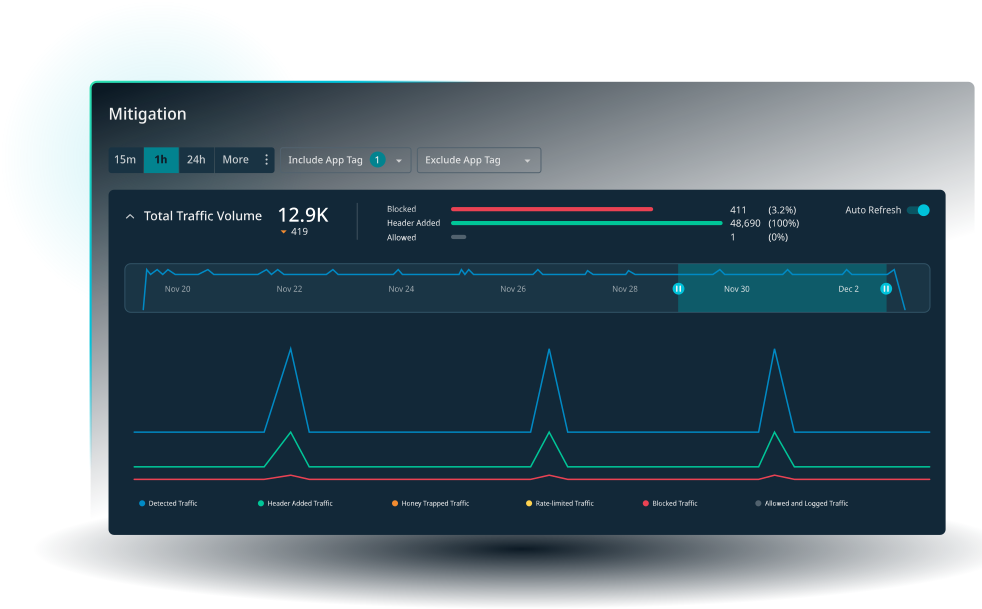
Source: Cequence
2. Wallarm Cloud-Native WAAP

Best for: API-heavy workloads needing inline protection anywhere
Strengths: Hybrid SaaS nodes, virtual patching, distributed rate limiting
Things to consider: Configuration and tuning take time for new users
Wallarm runs as a hybrid SaaS solution built from two parts: server-side software that deploys inside the customer’s own infrastructure, and a cloud-hosted analytics backend that handles detection modeling. The split keeps request payloads within the customer environment while analysis happens in the cloud.
Deployment targets include cloud-native, multi-cloud, edge, and on-premises environments, and Wallarm states that teams have protection running in around 15 minutes. The company reports that 88% of its customers operate in full blocking mode and that the platform protects over 20,000 applications.
Key features include:
- Coverage beyond OWASP Top 10: Protects against the OWASP Top 10 web application risks alongside account takeover, malicious bots, Layer 7 DDoS, and zero-day exploitation.
- Behavior-based ATO detection: Detects credential stuffing and brute force by inspecting and correlating sequences of requests rather than judging each request in isolation.
- Virtual patching: Applies virtual patches to critical issues on the fly, which shortens the window between vulnerability disclosure and code-level remediation.
- Distributed rate limiting: Lets teams define thresholds that stop automated tools, including bots and Layer 7 DDoS traffic, from overwhelming backend workloads.
- API-first protection: Defends APIs without depending on manual configuration or outdated and inaccurate API specifications.
- Geographic blocking: Restricts traffic to trusted regions and blocks unwanted geographies where compliance requirements call for it.
Limitations (as reported by users on G2):
- Configuration complexity: Initial configuration and tuning are described as time-consuming, particularly for teams without prior WAF experience.
- False positive management: Reaching full blocking mode can require building rules to suppress false positives, which some teams found more involved than expected.
- Pricing clarity: Pricing is not disclosed during trial access, and costs are reported to rise with request volume.
- Rule propagation delay: Synchronization between the Wallarm cloud and customer-side nodes introduces a short lag before new rules take effect.
- Documentation depth: Reviewers asked for more configuration examples and best-practice guidance in the documentation.
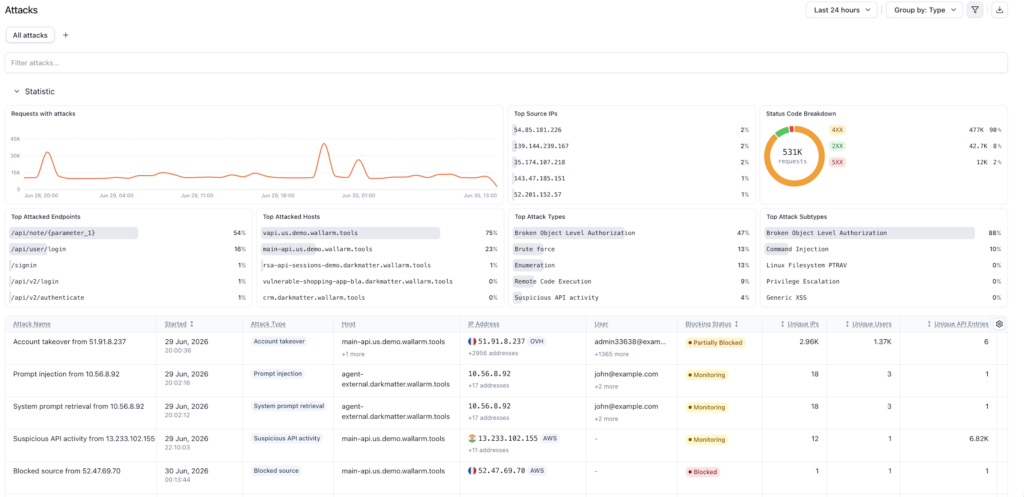
Source: Wallarm
3. Radware Cloud Application Protection Services

Best for: Hybrid estates wanting a managed protection service
Strengths: Behavioral policy automation, HTTPS DDoS defense, 24×7 ERT
Things to consider: Reporting flexibility and initial tuning need effort
Radware Cloud Application Protection Services bundles Cloud WAF, API Protection, Bot Manager, Web DDoS Protection, Client-Side Protection, and an LLM Firewall into one integrated service. The modules share attack data between them, so a signal detected by one component informs the others.
Policy generation is automated. AI-driven behavioral algorithms update security policy as traffic changes, and Radware positions this as the mechanism for keeping false positives low while adapting to application updates and platform changes. The service is delivered as a managed offering backed by a 24×7 Emergency Response Team.
Key features include:
- Automated positive security model: Builds policy from observed application behavior across on-premises, Kubernetes, hybrid, and cloud environments to reduce exposure to zero-day attacks.
- Web DDoS mitigation: Uses AI-driven behavioral algorithms to detect and mitigate HTTP-based DDoS assaults, including encrypted attack traffic.
- API auto-discovery and analysis: Discovers APIs continuously and maps business logic so API-directed abuse can be mitigated in real time.
- Bot filtering: Distinguishes human traffic, good bots, and bad bots across websites, mobile apps, and APIs, with policies that can be tuned per application.
- Account takeover detection: Identifies large-scale distributed account takeover attempts against websites, mobile apps, and APIs using behavioral analysis.
- Client-side protection: Monitors third-party services in the application supply chain to protect user data at the browser layer.
- Consistent multi-environment policy: Applies the same protection regardless of whether applications are hosted in private or public clouds.
Limitations (as reported by users on G2):
- Reporting flexibility: Out-of-the-box reports are described as rigid, with fixed templates and limited options for building executive-level views.
- Learning curve: The behavioral engine and advanced policy controls take time to understand, and several reviewers said skilled staff are needed to get full value.
- Configuration effort: Fine-tuning policies to match application behavior extended initial deployment beyond what teams had planned.
- Interface navigation: The dashboard is reported as dense, with some settings requiring several steps or backend requests to change.
- Cost: Pricing is described as high relative to alternatives, with some capabilities licensed as separate modules.
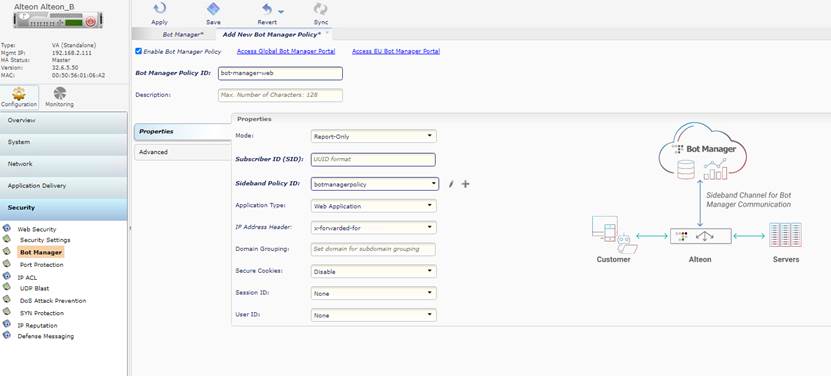
Source: Radware
Edge and CDN-Based WAAP Platforms
4. Akamai App & API Protector

Best for: Global high-traffic sites needing edge-first enforcement
Strengths: Adaptive Security Engine, Behavioral DDoS Engine, hybrid WAF
Things to consider: Config propagation delays; bot tuning needs support time
Akamai App & API Protector delivers WAF, Layer 7 DDoS defense, API discovery, sensitive data protection, and bot controls as a single cloud service running on Akamai’s distributed platform. Every request is inspected in real time at the edge before it reaches origin infrastructure.
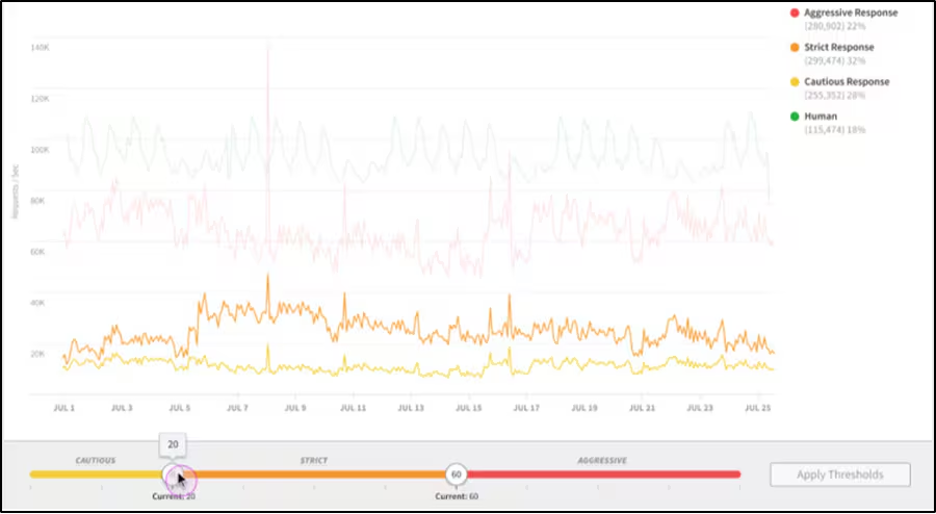
Two engines drive detection. The Adaptive Security Engine learns attack patterns and adjusts protections as threats change, and the Behavioral DDoS Engine handles volumetric and application-layer denial-of-service traffic. Akamai-managed updates and machine learning self-tuning reduce the manual rule work that otherwise accompanies a WAF at scale.
Key features include:
- Adaptive protections: Push updated app and API defenses automatically, including coverage for zero-days and newly published CVEs, without manual rule authoring.
- Behavioral DDoS Engine: Provides a full set of Layer 7 capabilities aimed at DDoS attacks that target HTTP, HTTPS, DNS, and SMTP services and bypass conventional controls.
- Hybrid deployment: App & API Protector Hybrid extends WAF protections off the Akamai edge into on-premises, hybrid cloud, and multi-CDN environments, covering north-south and east-west traffic.
- DevOps integration: Configuration changes can be automated through an open API, a Terraform provider, or the Akamai CLI, with a public Postman collection available for testing.
- API discovery and sensitive data protection: Identifies API endpoints and flags sensitive data exposure so protection extends to undocumented interfaces.
- SIEM and connector support: Offers a SIEM integration module plus connectors for Splunk and other providers for attack identification and forensic analysis.
- Edge malware scanning: An optional module scans uploaded files at the edge to stop malicious content before it reaches origin servers.
Limitations (as reported by users on PeerSpot):
- Configuration propagation: Pushing configuration changes across the network takes roughly 20 minutes, and rolling a change back takes a similar amount of time.
- Bot management tuning: Getting bot policies right for specific applications requires meaningful time working alongside Akamai support teams.
- Reporting visibility: Analytics and reporting in the management console were described as needing more depth for traffic pattern analysis.
- Documentation gaps: Reviewers reported that rule precedence behavior is not clearly documented, which complicated troubleshooting of conflicting rules.
- Cost: Pricing is consistently described as high compared with competing services.
Source: Akamai
5. Cloudflare Application Security

Best for: Consolidating WAF, bot, and API defense on one network
Strengths: Edge enforcement, fast virtual patching, API discovery
Things to consider: Advanced capabilities sit in higher tiers; rule tuning is complex
Cloudflare runs its WAF, API Shield, and Bot Management across its entire global network, so inspection happens on the server closest to the user rather than at a separate scrubbing location. Cloudflare states this adds virtually no latency, since decryption, inspection, routing, and caching occur in a single pass.
Rule coverage benefits from network scale. Cloudflare’s managed rulesets are exercised against a large volume of diverse traffic and tuned accordingly, and when a new vulnerability appears the security team writes and deploys a protective rule across the network within hours or minutes.
Key features include:
- Managed and custom WAF rules: Inspect HTTP and HTTPS requests at the edge to block SQL injection, cross-site scripting, and other OWASP Top 10 exploits before they reach the application.
- Virtual patching for CVEs: Blocks exploits targeting a specific CVE when one is announced for a library or framework in use, ahead of application-level patching.
- Automated API discovery: API Shield uses machine learning and heuristics to analyze traffic and catalog all API endpoints in use, including undocumented ones.
- Positive-model API enforcement: Blocks common API attacks including OWASP API Security Top 10 risks by requiring API traffic to conform to defined schemas.
- Response payload scanning: Continuously scans API response payloads for sensitive information to identify and stop data leakage.
- Bot mitigation at the edge: Machine learning models trained on network-wide traffic detect malicious automation, with Turnstile available as a CAPTCHA replacement for challenge flows.
- Inline content scanning: File-upload endpoints can be routed through WAF Content Scanning so dangerous files are quarantined or rewritten in flight.
- API-driven management: The WAF is fully managed via API, fitting configuration changes into existing CI/CD workflows.
Limitations (as reported by users on G2):
- Interface complexity: Reviewers found navigating advanced features difficult, with overlapping rule layers making it unclear which configuration governs a given behavior.
- Tier-gated capabilities: Advanced bot management, granular logging, and log export to a SIEM are associated with higher-cost plans.
- Managed rule false positives: Aggressive managed rulesets sometimes block legitimate traffic, and identifying which rule fired requires digging through security event logs.
- Learning curve: Teams without dedicated security staff reported that WAF rule and caching configuration takes time to learn.
- Support responsiveness: Response times on lower-tier plans were described as slow when troubleshooting complex configurations.

Source: Cloudflare
6. F5 Web App and API Protection

Best for: Hybrid multicloud estates needing one consistent policy set
Strengths: Coverage across SaaS, NGINX, and BIG-IP enforcement points
Things to consider: Console navigation and custom reporting can be cumbersome
The F5 Application Delivery and Security Platform converges WAF, API security, bot management, and DDoS mitigation into an integrated WAAP offering. Enforcement is available through several products so the same protection model can be applied at different points in an architecture.
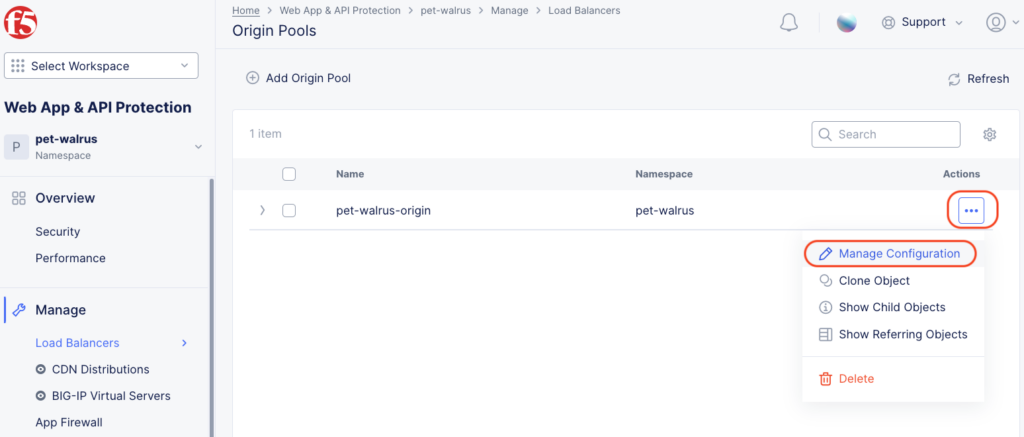
Those enforcement points include F5 Distributed Cloud WAF as a SaaS service, BIG-IP Advanced WAF for on-premises deployment and virtual patching, and F5 WAF for NGINX for Kubernetes and containerized workloads. A managed service option provides SaaS-delivered WAF operations on a 24/7 basis.
Key features include:
- Full lifecycle API security: Discovers and catalogs API endpoints, baselines normal behavior, and protects APIs from development through runtime with centralized enforcement across hybrid multicloud environments.
- Multi-signal bot defense: Detects automated threats using client, device, browser, identity, and behavior signals, applying step-up challenges only when needed.
- Distributed DDoS mitigation: Combines SaaS-based mitigation, lightweight Layer 7 DoS protection for NGINX, and BIG-IP AFM controls on-premises for blended multi-vector attacks.
- Continuous attack surface assessment: Web Application Scanning identifies exposed web apps and APIs and runs automated testing to uncover vulnerabilities feeding remediation priorities.
- Client-side defense: Monitors third-party and injected browser scripts to reduce client-side risk and data skimming.
- Aggregator traffic control: Manages third-party aggregator traffic separately from general automation to limit abuse without blocking legitimate integrations.
- Virtual patching: BIG-IP Advanced WAF applies virtual patches to mitigate OWASP Top 10 issues and zero-day risks while code fixes are prepared.
Limitations (as reported by users on TrustRadius):
- Interface navigation: The user interface and dashboard navigation are described as complex or dated, and load balancer configuration screens were called clunky.
- Policy tuning: Configuring and refining policies, particularly to reduce false positives, requires care and repeated adjustment.
- Reporting depth: Custom dashboards and global reporting are seen as less robust, with no built-in view for items such as certificate status across the platform.
- Access control granularity: Assigning narrow permissions per service was reported as difficult because API groups and elements are not intuitive.
- Initial setup: Onboarding and integration presented challenges for some teams, especially for applications not exposed to the public internet.
Source: F5
7. Fastly Next-Gen WAF

Best for: High-request-rate apps and APIs needing low-tuning detection
Strengths: SmartParse detection, NLX threat feed, advanced rate limiting
Things to consider: Interface and rule management can be time-consuming
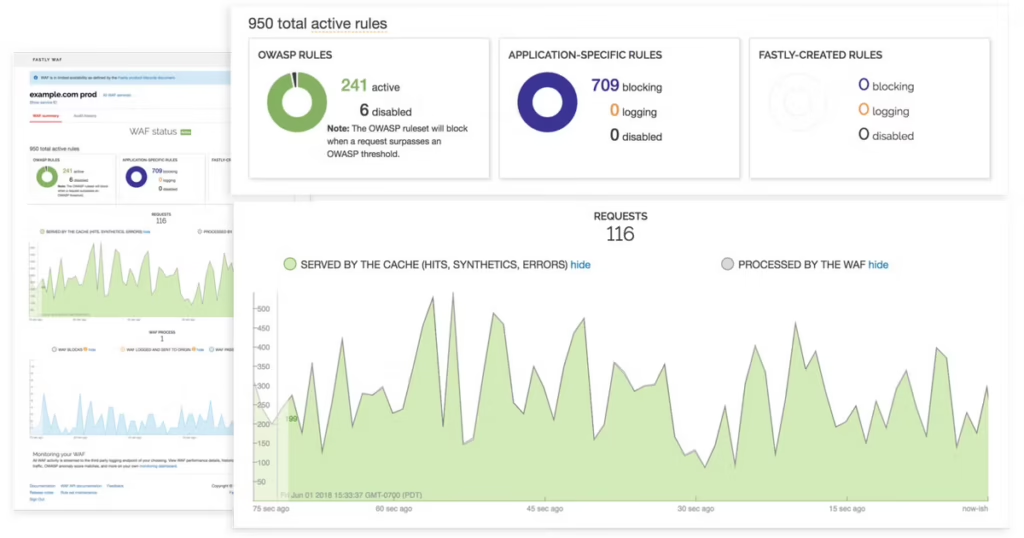
The Fastly Next-Gen WAF protects applications, APIs, and microservices from one solution regardless of where those workloads run. Its detection approach differs from regex pattern matching: SmartParse evaluates the context of each request and how it would execute to determine whether a payload is malicious or anomalous.
That design is what Fastly points to for low-tuning operation, since detection begins immediately rather than after a tuning period. The company reports that 90% of its customers run in full blocking mode, with more than 90,000 application deployments protected across over 100 supported cloud-native and datacenter platforms.
Key features include:
- Contextual detection with SmartParse: Makes inline decisions on each request by assessing execution context rather than matching signatures, enabling near-zero tuning at deployment.
- Network Learning Exchange: A trusted IP reputation feed built from anonymized confirmed malicious activity across tens of thousands of distributed customer agents, used to preemptively block known attack sources.
- Broad API protocol coverage: Detects and blocks attacks in SOAP, REST, gRPC, WebSockets, and GraphQL traffic, with dedicated GraphQL inspection.
- Advanced rate limiting: Stops malicious and anomalous high-volume web requests, reducing web server and API utilization while letting legitimate traffic reach endpoints.
- Threshold-based DDoS blocking: Automatically blocks abusive automated traffic once defined thresholds for key application functions are exceeded.
- Account takeover detection: Inspects web requests and correlates anomalous activity with malicious intent to block credential stuffing attempts.
- Flexible deployment: Installs through an agent-module software pair, or through edge and cloud-based options that require no software installation, including deployment via A10 Thunder ADC.
Limitations (as reported by users on G2):
- Interface navigation: The console was described as cumbersome to navigate, making rule setup and management time-consuming for some teams.
- Support responsiveness: Reviewers reported delays in getting assistance, particularly when refining configurations.
- Configuration effort: Defining advanced rules is described as challenging, and some teams needed vendor help for complex changes.
- Pricing: Costs are considered high for smaller projects, with additional charges tied to technical support involvement.
- Agent maintenance: Older deployments required manual updates to agents and web server modules rather than automatic updating.
- Documentation: Several reviewers pointed to limited documentation and tutorials as a barrier to using the full feature set.
Source: Fastly
8. Imperva Application Security Platform

Best for: Large estates wanting WAF, bot, DDoS, and CDN from one vendor
Strengths: Bot protection, API discovery, DDoS mitigation, integrated CDN
Things to consider: Cost and support response times draw consistent criticism
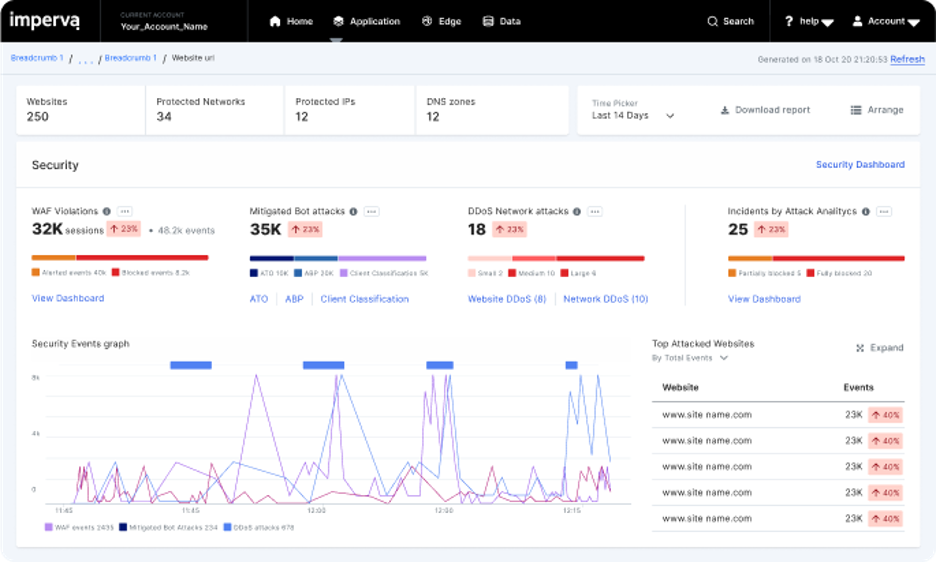
The Imperva Application Security Platform groups WAF, Advanced Bot Protection, API Security, DDoS Protection, Client-Side Protection, and a secure CDN into one product set. Imperva reports the platform analyzes more than 3.6 trillion requests monthly and blocks over 113 billion application attacks in the same period across 6,000-plus customers.
Filtering accuracy is a stated design goal. The platform is built to neutralize threats while filtering out harmless events, and Imperva reports that more than 90% of its customers run the platform in blocking mode rather than monitoring only.
Key features include:
- Web application firewall: Protects applications in any environment and is positioned around security efficacy combined with operational efficiency to lower total cost of ownership.
- Advanced bot protection: Defends websites, mobile apps, and APIs against sophisticated automated attacks while allowing legitimate users through.
- API security: Provides continuous protection of all APIs using deep discovery and classification of sensitive data flowing through them.
- DDoS protection: Automatically mitigates DDoS attacks against applications and networks with the aim of minimizing downtime during incidents.
- Client-side protection: Guards against formjacking, digital skimming, and Magecart-style attacks, and supports PCI DSS 4.0 client-side requirements.
- Account takeover protection: Protects login endpoints specifically to prevent account-based fraud.
- Integrated CDN: A secure content delivery network accelerates content and application delivery while attack protection runs on the same path.
- Cloud provider integrations: Dedicated offerings extend the platform’s protections to applications running on AWS and Google Cloud.
Limitations (as reported by users on PeerSpot):
- Cost: Pricing is widely described as high relative to competing platforms, with gateway licensing singled out by several reviewers.
- Support experience: Reviewers reported delays reaching support and inconsistent product knowledge from representatives.
- Analytics depth: Risk assessment and attack intelligence capabilities were described as needing enhancement to deliver better insight.
- Reporting and log management: Automated reporting and log management options are considered limited.
- On-premises integration: Integration with third-party services for on-premises deployments was flagged as an area needing improvement, with API security features oriented mainly toward cloud deployments.
- Availability: A small number of reviewers reported intermittent console downtime or loading failures.
Source: Imperva
Conclusion
For high-volume environments, WAAP needs to do more than block common web attacks. It must inspect web and API traffic at scale, control automated abuse, mitigate application-layer DDoS attacks, and adapt as applications and traffic patterns change. When evaluating a platform, prioritize sustained performance under peak loads, low-latency enforcement, API visibility, accurate bot detection, flexible policy controls, and actionable reporting. Testing these capabilities against representative production traffic is also important, since scalability, false-positive rates, and operational effort can differ significantly between environments.