


Key Takeaways
- CAPTCHA and SMS verification are no longer reliable — ML models solve image CAPTCHAs more accurately than humans, and SMS farms exploit carrier vulnerabilities.
- Biometric Check uses hardware-bound cryptographic attestation via a device’s Secure Enclave to confirm human presence — no codes, no puzzles, under a second.
- It’s the first bot verification mechanism that makes your actual false positive rate measurable, not estimated.
- The same checkpoint logic extends to AI agents: low friction for low-risk actions, a human-in-the-loop biometric gate before irreversible ones.
Every security team has dealt with this: a real customer gets locked out of their own account. Not by a hacker. Not by their own mistake. By a policy that was designed right and still got it wrong.
A customer logs into your app from a Tokyo hotel when their account was last seen in Chicago. Your bot detection system sees an anomalous endpoint, unusual geography, a suspicious pattern, and flags it. The customer is real. The flag is wrong.
It happens more than anyone likes to admit. And the downstream effect is worse than the individual block: security teams start pulling their punches. They’d rather let five bad actors through than block one good customer. The policies that should protect your applications never get deployed at full strength.
That’s the problem Biometric Check was built to solve. Biometric Check is Cequence’s bot verification mechanism that uses biometric authentication through the user’s device to confirm a human is present without friction or codes. And as it turns out, the same underlying challenge is about to get considerably more interesting — because bots aren’t the only automated traffic your security team needs to think about anymore.
The False Positive Trap
Bot detection is a probabilistic problem. Every system draws a line: score traffic, weigh signals, flag anything above the threshold. Push the line too aggressively and you catch real customers. Pull it back and you let bots through. There’s no perfect setting.
For years, the standard answer was to give flagged users a way to prove themselves: a CAPTCHA, an SMS code, an email verification link. The intent was sound. The execution wasn’t.
ML models now solve image-based CAPTCHAs more accurately than most humans. SMS farms and SS7 vulnerabilities have made phone-based verification weaker than it looks. Email codes add friction that kills conversion. The tools designed to separate humans from bots have become a hurdle that sophisticated attackers clear easily, while real users find them annoying.
The question worth asking: what genuinely can’t be automated?
How Does Biometric Verification Differ from CAPTCHA?
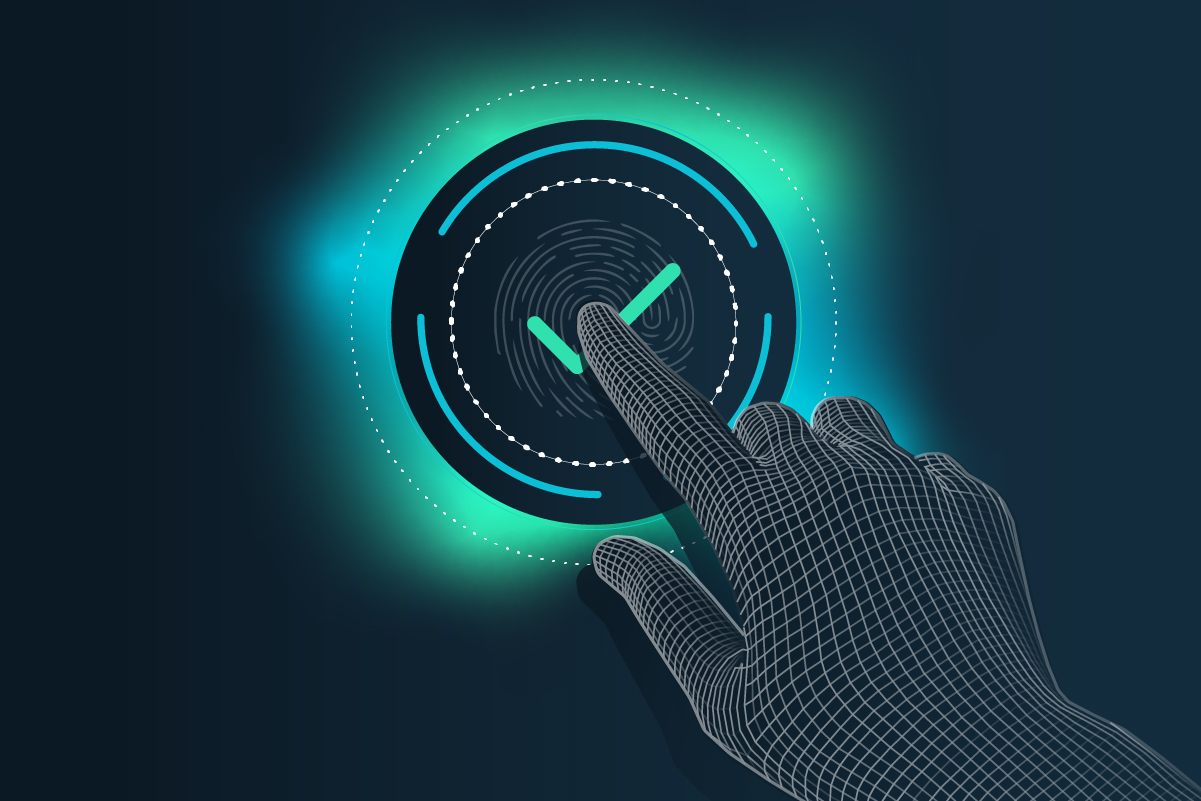
Biometric Check starts from a different premise. Instead of asking flagged users to solve a puzzle or wait for a code, it asks them to do something a bot farm can’t replicate: use the biometric hardware in their own device.
Touch ID. Face ID. Windows Hello. One tap or glance, and the verification is done.
The reason this works isn’t the biometric gesture itself — it’s what’s happening underneath. The verification uses open standards that generate a hardware-bound cryptographic proof via the device’s Secure Enclave. The biometric never leaves the device; what gets transmitted is a signed attestation that a real person, on a real registered device, completed the action.
You can’t forge that from a cloud VM. There’s no Secure Enclave to virtualize, no fingerprint sensor to spoof at scale. This is what makes biometric verification categorically different from every previous challenge mechanism: the cost of attacking it doesn’t go down as you scale up.
Here’s how it works in practice:
- Bot detection flags traffic above a confidence threshold; a suspicious geography, unusual endpoint pattern, or behavioral anomaly.
- Instead of serving a CAPTCHA, the system issues a biometric challenge to the user’s registered device.
- The device’s Secure Enclave generates a hardware-bound cryptographic attestation tied to that specific device and user.
- The signed proof, and never the biometric itself, transmits back as verification that a real person completed the action.
Verification takes less than a second, no puzzles, no codes, no waiting. For most legitimate users it’s invisible: just a familiar fingerprint or face scan.
Measuring What was Previously Invisible
There’s a secondary benefit that tends to resonate most with security leaders: Biometric Check makes your false positive rate measurable for the first time.
When a user passes the biometric challenge, you know with high confidence that they’re human and that your detection system got it wrong. That pass/fail data is a direct window into your actual false positive rate – not an estimate or an industry benchmark, but a real number from your own traffic.
That changes the conversation with the business. Instead of defending bot protection by saying “we blocked X attacks,” you can show exactly how aggressive your policies are, how many legitimate users you’re recovering, and where your thresholds need tuning. For CISOs making the case to CFOs and boards, that’s a real upgrade.
How Does Biometric Check Work for AI Agents?
The internet is shifting in a way that makes this more complicated. Cloudflare CEO Matthew Prince said at SXSW in March 2026 that he expects total bot traffic to exceed human web usage by 2027, driven by AI agents that may visit thousands of pages to complete a task a human would handle in five clicks.
We think that inflection is coming faster on the enterprise API surfaces our customers protect. Agentic AI traffic is on track to overtake traditional bot traffic within 9 to 12 months on high-value endpoints.
This creates a new version of an old problem. Today the question is: is this traffic human? Tomorrow it’s: is this AI agent authorized to do what it’s trying to do, and on whose behalf?
An AI agent browsing product pages and completing a checkout could be a legitimate shopping assistant or an automated fraud operation. In traffic logs, they’re indistinguishable. Same behavior, different intent. As we wrote in our post on why behavioral security still matters, patching code vulnerabilities and stopping behavioral abuse are two different problems, and agentic traffic makes that gap more consequential, not less.
The old “”bot or not” binary doesn’t hold here. For low-risk actions, agents operate freely. For high-stakes, irreversible actions such as wire transfers, record retrieval, contract modifications, a human-in-the-loop biometric gate belongs at the action boundary, not the front door. You need to apply trust dynamically, proportional to what an automated actor is actually trying to do.
Human-in-the-Loop, Extended to Agents
If you’ve spent time in agentic AI security, you know the concept of a human-in-the-loop: a checkpoint requiring explicit human authorization before an agent crosses a certain action boundary. It’s what keeps autonomous systems accountable when the stakes are high.
Biometric Check is an anonymous version of that mechanism applied to the human side. The same logic extends to agents acting on a user’s behalf. An agent browsing product pages can roam freely. The same agent attempting a checkout, modifying account settings, or calling a financial API? That’s where the checkpoint belongs, at the action boundary, not at the door.
This isn’t about blocking agents. Agents are useful when they operate within scope. The goal is proportional trust: low friction for low-risk actions, a human-in-the-loop gate before the ones that can’t be undone.
A few places where this matters now:
- Financial services – AI agent that manages your bills is fine, but one that initiates a wire transfer without explicit human re-authorization is a different story.
- Healthcare and benefits – Agents navigating insurance portals on behalf of patients can remove real friction, but that same capability creates liability if sensitive records can flow without a trust signal at the point of retrieval.
- B2B API workflows – A misconfigured or compromised agent can trigger bulk orders, expose pricing data, or modify contract terms, and enterprises largely don’t have good verification options before those irreversible calls yet.
- E-commerce – Flash sales and limited-inventory events have always attracted automation, and a checkout checkpoint, whether the buyer is human or an authorized AI agent, raises the structural cost of gaming them.
For a broader look at how Cequence is thinking about agentic AI security at the infrastructure level, our analysis of Anthropic’s agent security framework is worth reading alongside this.
Why this Requires Specific Experience
Not every security vendor can build this, and the reason isn’t technical complexity. It’s institutional knowledge.
The vendors who get agent verification right will be the ones who have spent years doing something most security companies have outsourced: actually interacting with bots. Not just detecting them or routing them to a mitigation service, but challenging them directly, watching how they respond, and learning from every exchange. Vendors who rely on delegated mitigation never develop that knowledge. The interaction happens elsewhere, and the signal doesn’t come back.
Cequence has been in that loop for a long time. That’s what makes Biometric Check possible as a capability that can evolve as the threat does. The question shifts from “is this automated?” to “is this agent authorized?” but the underlying expertise required is the same.
Most security vendors operate in one category: API security, application security, or bot management. Agentic traffic doesn’t respect those boundaries. Agents traverse APIs, authenticate against applications, and generate bot-like patterns, all in a single workflow. Reasoning about them requires visibility across all three categories at once, which isn’t something you can assemble from separate point solutions. API bot management built natively on top of API security turns out to be the right foundation here, in ways that weren’t obvious until agents started showing up in the data.
Where this Goes
Biometric Check solves a concrete, present-day problem: legitimate users blocked by bot detection with no recovery path that doesn’t add friction or introduce new exposure. That’s worth solving on its own terms.
But it’s also an early instance of something bigger: a framework for applying proportional trust to any automated actor, based on what it’s doing and what assurance you need before letting it proceed. The bot problem taught us that not all automation is malicious, and treating it that way has real costs. The agentic era is going to teach that lesson again, faster and at greater scale.
The organizations that build the right infrastructure now — before the inflection point, not after — won’t need to retrofit it later. We’ve been building toward this for a while. That’s not a coincidence. Want to see how Biometric Check works in practice, or talk through what agent verification looks like for your environment? Get in touch.