Back to API Bites

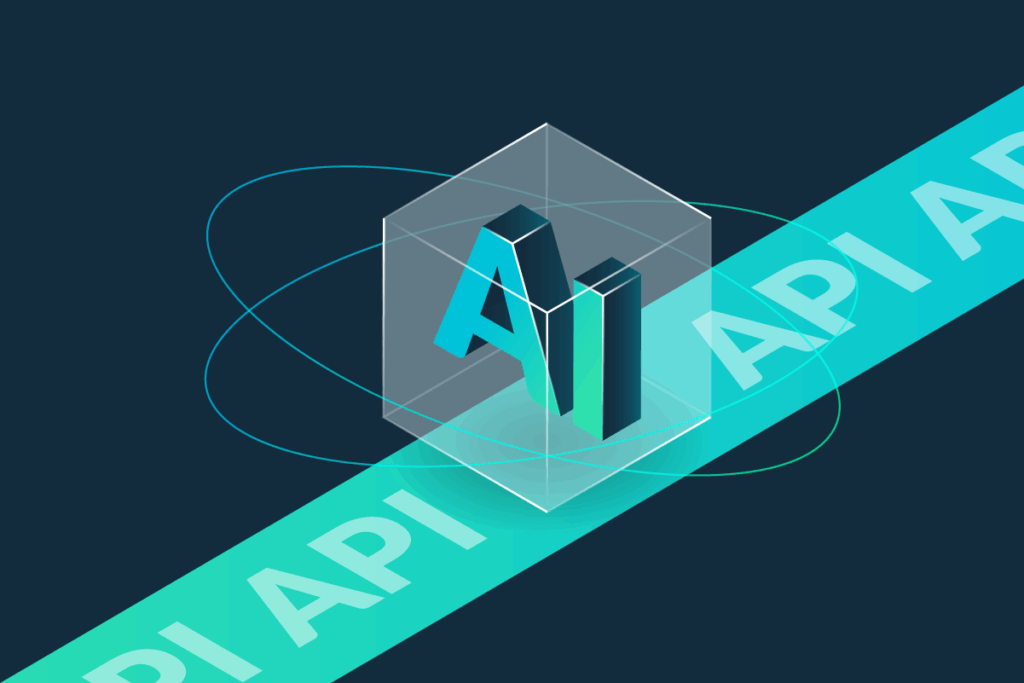
AI is no longer an experimental technology tucked away with research teams. It’s embedded in production systems, customer-facing applications, internal tools, and developer workflows. As organizations race to adopt AI for efficiency, insight, and automation, security teams are discovering a hard truth: AI changes the threat model just as much as it changes the business.
The relationship between AI and security is bi-directional. AI adoption reshapes security risk, and security maturity increasingly determines how far and how fast AI can be deployed. Understanding this dynamic is critical for organizations that want to innovate without exposing themselves to new and unfamiliar attack paths.
AI Expands the Digital Attack Surface
Modern AI systems leverage APIs as the primary means for accessing applications and data. Models retrieve data, call external tools, invoke internal services, and coordinate with other systems through programmatic interfaces. Every new AI capability typically introduces multiple new API interactions behind the scenes.
From a security perspective, this creates several compounding risks:
- More entry points – APIs once used by a small set of applications are now accessed by models, agents, and tools
- Higher automation volume – AI-driven requests can scale far beyond human traffic patterns
- Greater blast radius – A single exposed or abused API can have a much larger impact as AI-powered attacks can move at higher speed than most traditional attacks.
AI not only utilizes APIs, it amplifies their importance. Without strong controls at the API layer, organizations unintentionally create new pathways for abuse, data leakage, and operational disruption.
Autonomous AI Raises the Stakes
Agentic AI introduces another layer of complexity. Unlike traditional applications that execute predefined logic, autonomous agents can plan, decide, and act across multiple steps without direct human involvement. They can trigger workflows, modify systems, and interact with applications and sensitive data at machine speed. While this autonomy unlocks powerful use cases, it can also amplify the impact of mistakes. A single misconfiguration, overly broad permission, or flawed prompt can cascade into widespread damage. Abuse scenarios also become more dangerous: if an attacker hijacks or manipulates an agent, they may gain the ability to execute chains of actions that would otherwise require multiple compromises. In an agentic environment, security incidents are less about isolated requests and more about runaway processes that unfold at machine speed.
Legacy Security Tools Struggle to Keep Up
Most existing security controls were designed around human users and predictable application behavior. AI-driven traffic challenges those assumptions in fundamental ways. Traditional tools often fail because they:
- Rely on identity models that don’t map cleanly to AI agents or models
- Treat high-volume automation as either benign noise or false positives
- Lack behavioral context about which requests are AI-generated versus human-initiated
These shortcomings result in visibility and detection gaps. Security teams may see API traffic increasing but lack the insight to determine whether it’s expected AI behavior, risky automation, or active abuse.
Data Exposure Becomes a Constant Risk
AI systems are inherently data-centric. They continuously ingest, transform, and output information, often across organizational and system boundaries. This constant data movement creates persistent exposure risk.
Common pressure points include:
- Overly broad data access granted to models or agents “just in case”
- Unintended data inclusion in prompts, training inputs, or outputs
- Downstream leakage when AI-triggered APIs expose sensitive responses
In AI-driven environments, data security is no longer limited to protecting databases. It requires controlling how data flows through models, agents, and APIs in real time.
Adoption Outpaces Control
One of the most consistent patterns in AI adoption is speed. It’s often driven by IT and business teams moving quickly to experiment and deploy new capabilities. Security teams, meanwhile, are left trying to bolt controls onto systems that are already live. Without centralized visibility or enforcement, security becomes fragmented. Different teams deploy different models, tools, and agents, each with its own access patterns and risks. Over time, this sprawl makes it nearly impossible to answer basic questions: Which AI systems are active? What data can they access? What happens if something goes wrong?
Reframing Security for an AI-Driven World
Addressing these challenges requires a shift in how security is applied. Rather than treating AI as a special case, organizations must build security into the fabric of AI interactions. Effective approaches focus on:
- Centralizing AI access paths, often through an AI gateway
- Enforcing consistent authentication and authorization at the API layer
- Monitoring AI and agent behavior in real time for anomalies and abuse
- Tightly governing data flows used by AI systems
These controls provide visibility without slowing innovation, allowing teams to move fast while maintaining guardrails.
Security as an Enabler, Not a Blocker
The goal of AI security isn’t to restrict adoption, it’s to make it sustainable and a net positive to the business. When security controls are centralized, adaptive, and designed for automation, they enable organizations to scale AI with confidence. AI and security must evolve together. As AI becomes more autonomous and interconnected, security must become more intelligent and proactive in response. Organizations that recognize and act on this interdependence will be best positioned to unlock AI’s value without inheriting unnecessary risk.
Launching Your Agentic AI Projects Safely
The Cequence AI Gateway enables organizations to safely unlock the promise of agentic AI productivity by easily connecting agents to enterprise and SaaS applications and data. Built-in monitoring and guardrails provide the visibility and protection needed for organizations to confidently launch their agentic AI projects. Go from prototype to production without incurring the technical debt associated with basic solutions that lack core enterprise hosting, authentication, authorization, and monitoring capabilities. The AI Gateway also integrates with the Cequence UAP platform, offering enhanced protection for enterprise applications and data from malicious agents and users. Book a demo with us to learn more and see how Cequence can help.