Back to API Bites

Creative Ideas Born from Shared Challenges
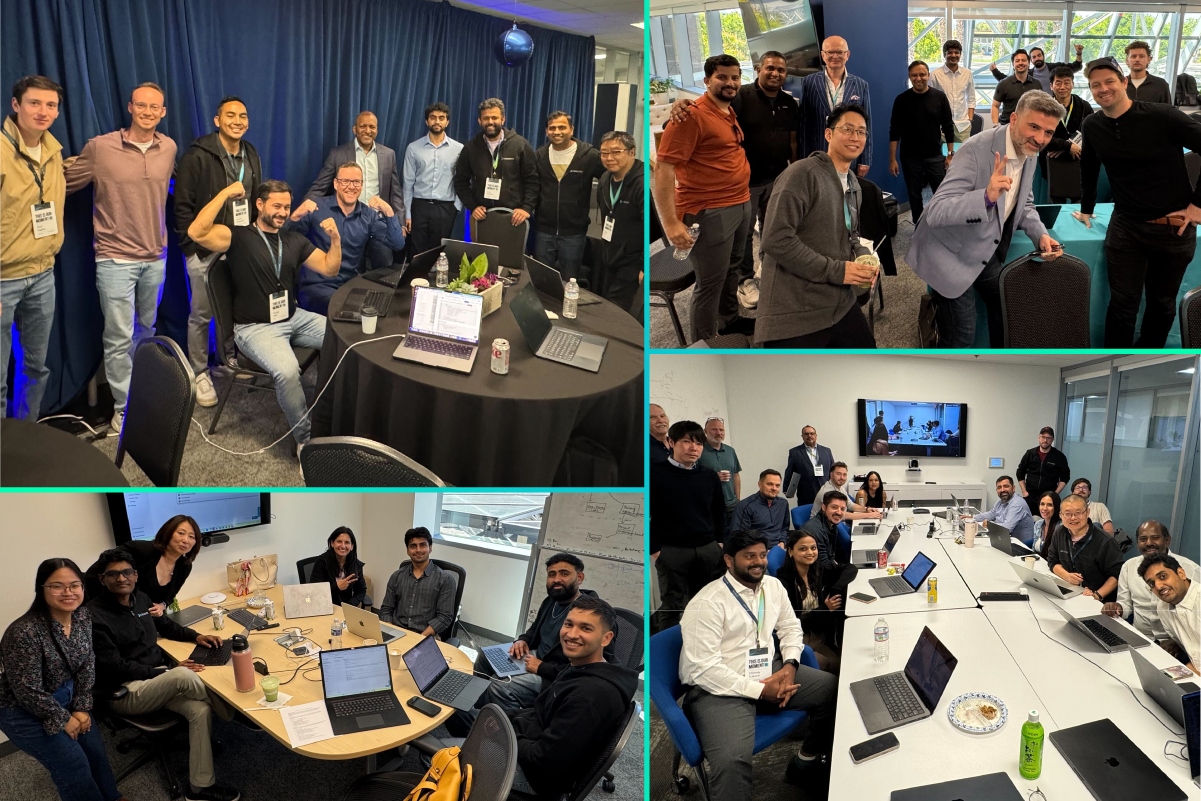
At Cequence, we did something a little unusual at our Sales Kick-off this year. We ran a company-wide AI hackathon — and the rule was simple: everyone participates, not just engineers.
Sales. Marketing. Finance. HR. Operations. Support. Every discipline, every function. Engineering was there too, but only to help implement once the ideas were solidified. This was intentional. We didn’t want another engineering-first initiative where most of the company watches from the sidelines. We wanted everyone to own it.
What happened next surprised even the most optimistic among us.
When you tell people “build something with AI that solves a real problem you face every day,” the creativity that comes back is remarkable — because it’s grounded in lived experience, not abstraction.
Sales teams built agents to discover and qualify leads, generating nuanced, context-rich reports and surfacing real-time pipeline views integrated with every platform they work in daily. Marketing went deep on competitive research — building tools that generate tailored content for specific domains and sales scenarios, not generic copy but precisely calibrated messaging. Finance tackled something genuinely hard: revenue intelligence and FinOps across all our cloud environments, with per-tenant COGS visibility that had previously required hours of manual work to surface. HR automated the onboarding journey across 15+ internal services — turning a fragmented, weeks-long process into something fluid and self-directing for new team members. Operations and Support built triage agents that can intelligently classify and route bugs and customer requests, with automation that removes the repetitive cognitive load from their daily queues.
The Real Win: The Language Everyone Now Speaks
Before the hackathon, most of the company had heard the buzzwords — skills, agents, MCPs, CLIs, MCP-UI — but they were abstractions. Technical vocabulary that felt like it belonged to a different part of the organization.
After two days of building together, those words had meaning attached to them. Personal, hands-on meaning. A sales rep now knows what an MCP is because she built one to pull in prospect signals from multiple sources. A finance analyst understands agentic workflows because he designed one to reconcile cloud billing data. The HR team can talk about prompt engineering because they iterated on it themselves until their onboarding bot actually worked the way they imagined.
That shift — from passive awareness to active fluency — is something you can’t manufacture with a training session or an all-hands demo. You have to build something that fails, figure out why, and fix it. That’s what happened here.
We Ate Our Own Cooking
Here’s the part that made this more than just a fun company event.
Every agent, every workflow, every tool built during the hackathon was deployed and demonstrated through our own AI Governance Gateway — Cequence’s product that provides persona-based granular access control and security for AI deployments.
That means the Sales team’s lead qualification agent, the Finance team’s cloud COGS analyzer, the HR onboarding bot — all of them ran under the same governance framework we offer our customers. Different personas, different access levels, different policies enforced in real time. Not as a demo. As the actual infrastructure for the event.
This was not planned as a marketing exercise. It was a practical decision — it’s the right way to deploy AI agents in any organization that cares about security and control. But the effect was powerful: every person in the company who built something also experienced what governed AI deployment looks like from the inside. They felt the difference between “AI running loose” and “AI running with guardrails.”
That’s a kind of product conviction you can’t get from a sales deck.
What We Learned About Running This Kind of Initiative
A few things stood out:
Cross-functional teams are a feature, not a bug.
Every team that formed organically brought together people who understood the problem deeply and people who could help shape the solution. The tension between “what I need” and “what’s possible” is where the best ideas live.
Non-engineers are often better at scoping AI problems.
They have sharper intuitions about where the friction actually is. They don’t over-engineer the solution. They ask “does this actually work for what I need?” faster.
The messy middle is where learning happens.
The teams that struggled the most with ambiguity came out the other side with the deepest understanding. That’s not a coincidence.
Why This Matters Beyond the Hackathon
We build API security products that protect AI-driven applications — and our AI Gateway exists precisely because organizations deploying AI agents at scale need persona-based access control, policy enforcement, and security baked in from the start. Our entire business is predicated on organizations navigating the intersection of AI and security thoughtfully. If we’re going to speak credibly to our customers about that, we need to be living it ourselves — not just in the product, but in how we work.
This hackathon was a step toward that. Not a destination. A step.
The projects are still evolving. Some will make it into actual workflows. Some will inform our roadmap in ways we haven’t anticipated yet. All of them changed something in the people who built them.
That, in the end, was the point.
Huge congratulations to every team at Cequence who showed up, got their hands dirty, and built something real. The bar has been raised — and we raised it together.