
TL;DR: Agentic AI security vendors protect agents that plan, call tools, and act on enterprise systems. Cequence is best for comprehensive agent containment, Zenity for SaaS agent governance, Noma for homegrown agents, Prisma AIRS for platform consolidation.
What Is an Agentic AI Security Solution and How Should You Evaluate One?
Evaluating agentic AI security vendors requires looking past marketing demos to assess core capabilities like data-layer controls, runtime behavior monitoring, and shadow AI discovery. Unlike conventional applications, agents may dynamically choose which APIs to call, access sensitive data, generate code, or modify external systems. This creates security risks that cannot always be addressed with fixed access controls or application security tools.
These vendors typically secure the full agent lifecycle. Their products may discover deployed agents, monitor prompts and tool calls, enforce permissions, detect prompt injection, restrict access to sensitive data, and log agent actions for investigation and compliance. Some also evaluate agents before deployment by testing how they respond to malicious inputs, excessive permissions, compromised tools, and other attack scenarios.
Key evaluation criteria
Use these five dimensions to compare vendors on the same terms:
- Agent and AI discovery: Whether the platform finds every agent, MCP server, tool, and model in the environment, including ones deployed without approval.
- Identity and least-privilege access control: Whether each agent gets its own scoped identity and permissions tied to your identity provider.
- Runtime enforcement at the tool and API layer: Whether the platform inspects and blocks individual tool calls and API calls inline, across a full session.
- Visibility, audit logging, and compliance evidence: Whether the platform attributes every action and retains it in a form auditors and incident responders can use.
- Deployment model and enterprise scale: Whether the platform fits your deployment constraints, throughput, and licensing model without rewriting agents.
Solutions covered in this guide:
Agentic AI Security Platforms
- Cequence Security: Inline agent identity, least-privilege access, tool-call enforcement, and AI discovery.
- Zenity: Agent discovery, posture management, and runtime enforcement across SaaS, cloud, and endpoints.
- Noma Security: Discovery, access control, runtime detection, and red teaming across homegrown, SaaS, and endpoint agents.
- HiddenLayer: Model, AI supply chain, runtime, and agentic security with attack simulation.
Enterprise Security Platforms with Agentic AI Coverage
- Palo Alto Networks Prisma AIRS: AI discovery, agent identity, runtime protection, red teaming, and AI gateway controls.
- Cisco AI Defense: Network-level AI guardrails, MCP security, AI discovery, and supply chain risk management.
- CrowdStrike Falcon Guardian: Endpoint-focused agent discovery, prompt-to-action tracing, runtime detection, and containment.
- Microsoft Entra Agent ID: Managed agent identities, Conditional Access, lifecycle governance, and agent registry capabilities.
In this article:
- Why Organizations Need Dedicated Security for Agentic AI
- How to Choose an Agentic AI Security Vendor
- Common Agentic AI Security Platforms and How They Meet the Criteria
- Notable Agentic AI Security Vendors
Why Organizations Need Dedicated Security for Agentic AI
Autonomous Decision-Making Expands the Attack Surface
Traditional applications generally follow predefined execution paths. AI agents can select actions dynamically based on their instructions, available context, model output, and intermediate results. The same input can therefore lead to different sequences of tool calls and system interactions.
Security teams need visibility into these decision paths rather than only the initial prompt and final response. Controls should detect unexpected actions, enforce boundaries at runtime, and prevent an agent from exceeding its intended role even when its reasoning or planning changes.
Agents Can Access Tools, APIs, and Sensitive Systems
Agents become more consequential when connected to databases, SaaS applications, internal APIs, code repositories, browsers, or infrastructure. An agent with broad credentials may be able to read confidential information, modify records, send messages, execute code, or change system configurations.
Security should apply least-privilege access to each agent and tool. It should also validate tool parameters, control credential use, restrict sensitive operations, and require additional authorization for high-impact actions. Monitoring should connect each action to the agent, user, tool, and data involved.
Prompt Injection Can Influence Multi-Step Workflows
Prompt injection occurs when malicious instructions alter how an AI system behaves. For agents, those instructions may come directly from a user or indirectly from content the agent retrieves, such as a web page, document, email, or tool response.
The risk extends beyond producing an incorrect answer. A successful injection can influence later planning and tool use, potentially causing data disclosure or unauthorized actions. Effective defenses combine input and content inspection with permission boundaries, tool-call validation, data controls, and monitoring throughout the workflow.
How to Choose an Agentic AI Security Vendor
Each criterion below covers a distinct control. Work through them in order, because discovery limits what identity can scope, identity limits what runtime enforcement has to catch, and logging determines what you can prove afterwards.
1. Agent and AI Discovery
Agents enter an enterprise from several directions at once. Engineering teams build them on cloud model platforms, business users assemble them in low-code tools, and employees connect coding assistants to MCP servers without telling security. A platform cannot protect agents it never sees, so discovery sets the ceiling for every other control in the stack. It also determines whether your inventory is a real picture of the estate or only a list of what was registered voluntarily.
Evaluation criteria:
- Does it find agents across cloud, SaaS, endpoint, and homegrown environments?
- Does it inventory MCP servers, tools, skills, and LLM providers, not just agents?
- Does it map each agent's connections, permissions, and data access paths?
- Does it surface shadow AI deployed without security approval?
- Does discovery run continuously rather than as a one-time scan?
2. Identity and Least-Privilege Access Control
An agent operating with a broad service account or an inherited user token can reach far more than its task requires. Many agent incidents involve permissions that were technically valid at every step. Controls here decide what an agent can touch before any detection is needed, so weak scoping pushes the entire burden onto runtime enforcement. Scoping should be per agent and per tool, not per platform.
Evaluation criteria:
- Does each agent get its own identity rather than sharing a human or service account?
- Does it integrate with your existing identity provider, including OAuth 2.0 or 2.1?
- Can permissions be scoped per agent, per tool, and per API?
- Does it manage token issuance, refresh, and revocation?
- Can agent access be time-bound and reviewed like any other account?
3. Runtime Enforcement at the Tool and API Layer
Prompt filtering stops some attacks, but agents cause damage through the actions they take. The meaningful control point is the call an agent makes to a tool, an MCP server, or an API. Enforcement should happen inline in that path and across a full session, because a chain of individually authorized calls can still add up to an outcome nobody approved. Detection alone is not enough if the platform cannot halt the agent.
Evaluation criteria:
- Does it inspect and block individual tool calls, not only prompts and responses?
- Does it evaluate a full session rather than one request at a time?
- Does it cover MCP traffic, direct API calls, and model routing?
- Can it halt an agent mid-execution, revoke access, or terminate a session?
- Does it detect prompt injection arriving from retrieved content, not just user input?
Related content: Read our guide to the top MCP security risks and how to prevent them
4. Visibility, Audit Logging, and Compliance Evidence
After an incident, the question is which agent did what, on whose behalf, with which tool, against which data. The same record carries the compliance load. The EU AI Act obliges deployers to monitor high-risk systems in operation, retain logs for at least six months, and report serious incidents, and auditors expect an inventory alongside them. Logs that stop at the prompt answer neither question.
Evaluation criteria:
- Is every tool call attributable to an agent, a user, and a data set?
- Do logs reconstruct the full action chain, not just fire alerts?
- Are logs retained long enough for your regulatory obligations?
- Does it export to your SIEM and existing investigation workflows?
- Does it produce inventory and policy reports auditors will accept?
5. Deployment Model and Enterprise Scale
Inline enforcement sits in the request path, which turns throughput, latency, and availability into security questions. Deployment effort matters just as much, because a control that requires rewriting agents or standing up new infrastructure tends to arrive long after the agents do. Licensing deserves the same scrutiny, since token and credit models behave differently from per-user pricing as adoption grows.
Evaluation criteria:
- Does it support SaaS, on-premises, or hybrid deployment to match data residency rules?
- Does onboarding require code changes to agents or applications?
- What latency does inline enforcement add, and is there a high-availability path?
- Are there separate pre-production and production modes?
- Is it licensed by tokens, agents, users, or traffic volume?
Common Agentic AI Security Platforms and How They Meet the Criteria
The table below summarizes how each platform measures up against the five criteria. Each one is explored in detail underneath, with a criteria-fit table of its own.
Category Solution How It Meets the Criteria Agentic AI Security Platforms Cequence Security Strongest on identity and inline enforcement at the agent-to-application path, with OAuth 2.1 integration, Agent Personas, and policy applied to every tool call. Discovery, audit trails, and SaaS or on-premises deployment are built in. Agentic AI Security Platforms Zenity Broad discovery and posture across SaaS, cloud, and endpoint agents, with Runtime Boundaries that allow, block, or terminate an action in real time. Compliance evidence is less developed than detection and enforcement. Agentic AI Security Platforms Noma Security Covers discovery, access control, red teaming, and runtime detection across three agent environments from one platform. Identity capability layers on the existing IdP rather than issuing agent credentials. Agentic AI Security Platforms HiddenLayer Deep on model and supply chain security with agentless runtime defense and attack simulation. Little native identity or least-privilege scoping for agents, and deployment is reported as engineering-heavy. Enterprise Security Platforms with Agentic AI Coverage Palo Alto Networks Prisma AIRS Covers all five criteria in one platform, including shadow AI discovery, agent identity, an AI Gateway, and posture management. Some modules are newer, and credit-based licensing complicates cost forecasting. Enterprise Security Platforms with Agentic AI Coverage Cisco AI Defense Network-level guardrails and MCP scanning with no agents or libraries to deploy, plus standards alignment for audit. Agent identity sits in separate Cisco products, and coverage depends on Cisco network infrastructure. Enterprise Security Platforms with Agentic AI Coverage CrowdStrike Falcon Guardian Runtime detection and containment at the point of execution, tying agent actions to endpoint telemetry. Coverage is anchored to managed endpoints, and the AI gateway capability is not yet available. Enterprise Security Platforms with Agentic AI Coverage Microsoft Entra Agent ID Strongest on agent identity, lifecycle governance, and registry inside the Microsoft estate. Enforcement works at the identity and network layer rather than inspecting individual tool calls.
Notable Agentic AI Security Vendors
How we selected these solutions: We shortlisted agentic AI security platforms based on agent and AI discovery, agent identity and access control, runtime enforcement over tool and API calls, audit logging and compliance evidence, and enterprise deployment options.
Agentic AI Security Platforms
1. Cequence Security

Best for: Connecting agents to enterprise APIs and SaaS applications
Strengths: Agent Personas, trusted MCP registries, inline tool-call policy
Things to consider: Initial policy tuning takes time in large, complex estates
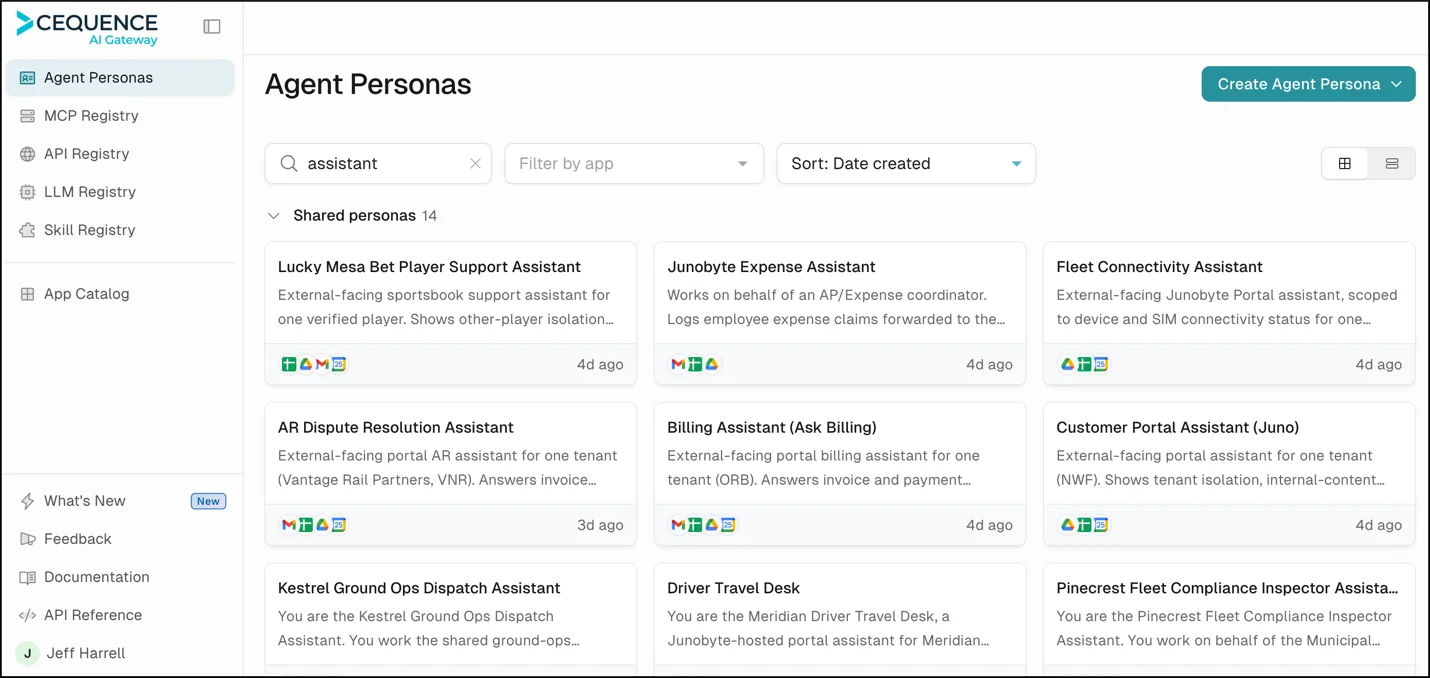
The Cequence AI Gateway sits between AI agents and the applications and data they reach. It authenticates the agent and then verifies every action the agent takes, enforcing policy inline in the request path for the duration of a session rather than at a single checkpoint.
The gateway treats an agent as a privileged insider rather than a tool. Access is bound to a written job description, and behavior is judged in context rather than on authentication alone. The product also converts existing internal, external, and SaaS APIs into MCP-compatible tools without code, which is how agents reach a catalog of more than 200 enterprise applications such as Salesforce, Jira, Slack, and Confluence.
Key features include:
- Agentic zero trust architecture: The gateway authenticates each agent and then verifies every subsequent action, applying policy inline in the request path across the full session and on each tool call.
- Agent Personas: An agent's job description, written in plain English, generates a persona carrying only the tools, APIs, skills, and permissions that job needs, with boundaries and guardrails applied automatically from that scope.
- Trusted registries and guardrails: The platform maintains registries of vetted MCP servers, APIs, LLMs, and skills. Prompt Guard screens prompts for injection, jailbreak, and system-prompt-extraction patterns, and organizations can add custom rules.
- End-to-end authentication and authorization: Integration with OAuth 2.1-compliant identity infrastructure applies organizational identity policies to agents, with built-in token lifecycle management and session binding that locks authenticated sessions to originating IP addresses.
- Monitoring and audit logging: Real-time visibility into AI-to-tool traffic records which applications agents access and which API calls they make, with tool-level and agent-level audit trails and SIEM integration.
- Sensitive data protection: DLP scanning is applied to agent requests and MCP server responses, with monitoring, redaction, and blocking across more than 100 out-of-the-box detection types, plus coverage across a sequence of calls rather than a single hook.
- AI Discovery and spend controls: The platform surfaces shadow MCP servers, agents, and LLM providers enterprise-wide from existing SIEM logs, and enforces token limits per minute, day, and month alongside monetary spend caps per team.
Criterion Solution Fit Key Considerations Agent and AI discovery AI Discovery surfaces sanctioned and shadow agents, MCP servers, and LLM providers enterprise-wide from existing SIEM logs, alongside API discovery and inventory. Discovery draws on SIEM log sources, so coverage tracks what those logs already capture. Identity and least-privilege access control OAuth 2.1 IdP integration with token lifecycle management and RBAC. Agent Personas generate least-privilege scopes from a written job description. Personas need an accurate job description up front to scope an agent correctly. Runtime enforcement at the tool and API layer Policy is enforced inline in the request path, for the full session, on every tool call. Prompt Guard, automated tool risk scoring, rate limits, and spend limits apply at the same point. Reviewers note that tuning detection and policy configuration takes time in large environments. Visibility, audit logging, and compliance evidence Logs every user, agent, and tool action, with tool-level and agent-level audit trails that export to your SIEM. Cequence shares supporting documentation under NDA to help customers meet EU AI Act obligations. Confirm log retention periods and SIEM export formats match your regulatory obligations. Deployment model and enterprise scale SaaS-based and on-premises deployment, horizontal scaling, no-code MCP enablement in minutes, continuous environment monitoring, and separate pre-prod and prod modes. Inline enforcement adds a single hop to the request path, so validate latency at peak agent traffic.
2. Zenity

Best for: Governing agents across SaaS platforms, cloud, and endpoints
Strengths: Runtime Boundaries, intent-aware AIDR, exposure validation
Things to consider: No documented sandboxed execution environment for agents
Zenity builds its platform around the moment an agent makes a decision, rather than around the prompt or the response. The architecture has three layers that operate as one system: Surface, Enforce, and Protect.
Surface builds a live inventory of agents, evaluates how each is configured, and tests which attack paths are actually exploitable. Enforce acts at the point a decision is made, allowing a safe action through or stopping an unsafe one. Protect watches what happens afterwards, reconstructing execution paths and turning each investigation into a sharper rule.
Coverage spans three agent types: agents embedded in SaaS products such as Salesforce Agentforce and Copilot Studio, homegrown agents on AWS Bedrock and Google Vertex AI, and personal or coding agents running locally.
Key features include:
- AI Observability: Builds a live inventory of agents across SaaS, custom, and endpoint deployments, and tracks the data each agent touches.
- AI Security Posture Management: Evaluates agent configuration and permissions against policy before an agent goes live, catching misconfigurations pre-deployment.
- AI Exposure Management: Validates which of an agent's attack paths are genuinely exploitable, scores each one, and produces a fix that can be applied directly in Runtime Boundaries.
- Runtime Boundaries: Evaluate every action an agent takes in real time and determine whether it proceeds, is blocked, or the agent is terminated, including for long-horizon agents running multi-step tasks over hours or days.
- Agentic Identity: Correlates enforcement with the credentials an agent actually holds, so a deactivated or over-scoped role is caught before it can be exploited.
- AI Detection and Response: Monitors execution step by step, reads a sequence of tool calls and retrievals together rather than in isolation, and maps findings to OWASP and MITRE ATLAS.
- MCP Security and DFIR: Covers MCP connections as a distinct control surface, while AI-powered forensics reconstruct the full decision chain when something gets through.
Criterion Solution Fit Key Considerations Agent and AI discovery AI Observability maintains a live inventory across SaaS, cloud, custom, and endpoint deployments, including shadow agents built on low-code platforms. Published peer review volume is limited, so coverage is best validated against your own estate in a trial. Identity and least-privilege access control Agentic Identity correlates enforcement with each agent's actual credentials and flags deactivated or over-scoped roles. Works alongside an existing identity provider rather than issuing agent credentials itself. Runtime enforcement at the tool and API layer Runtime Boundaries evaluate every action inline and allow, block, or shut down the agent. AIDR reads full execution chains rather than single events. No sandboxed execution environment for agents is publicly documented. Visibility, audit logging, and compliance evidence Digital forensics reconstruct the full decision chain after an incident, and Guardian Agents convert investigations into policy. Compliance evidence automation is less developed than the detection and enforcement layers. Deployment model and enterprise scale SaaS delivery covering SaaS agent platforms, cloud and homegrown agents, and local agents via lightweight monitoring. Available through cloud marketplaces. Coverage is broadest in Microsoft and SaaS-heavy estates; confirm depth for custom stacks.
3. Noma Security

Best for: Homegrown, SaaS, and endpoint agents from one platform
Strengths: AI-SPM, access control, red teaming, and runtime detection
Things to consider: Little independent review coverage to validate claims
Noma divides the enterprise AI estate into three environments and covers each with the same set of controls. Endpoint agents are the coding assistants and personal agents employees run on their own machines, connected to MCP servers that reach production code and internal APIs. Homegrown AI covers applications engineering teams build on AWS Bedrock, Azure AI Foundry, Databricks, LangChain, and CrewAI. SaaS agent platforms cover agents that business teams assemble in Copilot Studio, Agentforce, and ServiceNow.
Four products share intelligence across those environments. Discovery context makes access policies more precise, and a vulnerability found during red teaming becomes an enforced pattern in production.
Key features include:
- AI-SPM: Discovers every agent, MCP server, skill, and model across the three environments, then surfaces misconfigurations and combinations of agent capabilities that are risky together.
- Agent risk map: Shows each agent's blast radius, covering its connections, permissions, and data access paths, so cascading risk scenarios are visible before deployment.
- Access control: Policies govern which MCP servers, skills, and tools an agent may use, keyed to IdP groups or applied organization-wide by tool sensitivity, with a live registry of what is approved and blocking for everything else.
- AI-DR: Detects prompt injection, data exfiltration, scope violations, and agents drifting from their intent, evaluating each action against the session around it, the identity behind the agent, and behavior over time.
- Graduated response: Based on policy, runtime detection alerts, blocks, masks data, or routes an action to a human rather than applying a single response to every finding.
- AI red teaming: Compounds attack techniques into multi-turn campaigns that escalate at each turn, with prebuilt scan profiles and compliance presets, and findings feed directly into AI-DR runtime policies.
- Compliance and supply chain coverage: Produces inventory, framework mappings, test results, and audit trails, and scans models, MCP servers, tools, and packages across the AI supply chain.
Criterion Solution Fit Key Considerations Agent and AI discovery AI-SPM discovers every agent, MCP server, skill, and model across endpoint, SaaS, and homegrown environments, with an agent risk map of connections and data access. Discovery routinely surfaces far more assets than teams expect, which requires triage capacity at rollout. Identity and least-privilege access control Access control policies are keyed to IdP groups or applied by tool sensitivity, and agentic identity use cases tie actions to the identity behind the agent. Layers on the existing identity provider rather than issuing scoped agent credentials itself. Runtime enforcement at the tool and API layer Access control blocks unapproved MCP servers, skills, and tools. AI-DR evaluates each action in session context and can alert, block, mask data, or escalate. Enforcement depth varies by environment, so test in the one where your agents actually run. Visibility, audit logging, and compliance evidence Compliance and reporting cover inventory, framework mappings, red team results, and audit trails from a single control plane. Independent review coverage is sparse, so reference calls carry more weight than published ratings. Deployment model and enterprise scale One platform spanning three environments, with SaaS or self-hosted options and policies applied organization-wide or per group. Breadth across three environments can mean less depth than a specialist in any single one.
4. HiddenLayer
Best for: Model-level and AI supply chain security across the lifecycle
Strengths: Agentless runtime defense, attack simulation, model scanning
Things to consider: Deployment reported to need ML and infrastructure engineers
The HiddenLayer AISec Platform covers four modules across the AI lifecycle: AI Discovery, AI Supply Chain Security, AI Runtime Security, and AI Attack Simulation. Its origin is model security, and the platform still works closest to the model, validating integrity before deployment and detecting attacks against models in production.
Agentic coverage sits on top of that foundation. Agentic and MCP security protects autonomous agents from prompt injection, unsafe tool use, and harmful autonomous actions, and Agent Harness Security adds runtime visibility and inline enforcement for AI coding agents.
The platform is model-agnostic and agentless, and it operates without access to model weights, prompts, training data, or customer data. Native connectors cover cloud platforms, CI/CD, data platforms, SIEM and SOAR, API gateways, and MLOps tooling.
Key features include:
- AI Discovery: Builds a living inventory of AI across the environment, including shadow AI, showing where models are used, by whom, and with what level of access.
- AI Supply Chain Security: Scans models for malware, vulnerabilities, backdoors, and unknown components before they reach production, validating integrity and supply chain provenance.
- AI Runtime Security: Detects and responds to attacks in production without requiring access to intellectual property, weights, prompts, or customer data.
- AI Attack Simulation: Runs adversarial simulations continuously against AI systems rather than as a periodic exercise, uncovering weaknesses as the systems change.
- AI Guardrails: Enforce policies that prevent prompt injection, data leakage, and unsafe AI behavior in real time across applications, models, and business units.
- Agentic and MCP security: Protects autonomous and tool-using systems from misuse, privilege escalation, and cross-system exploitation, with Agent Harness Security covering AI coding agents specifically.
- Governance and posture: Provides organization-wide visibility into every model, applies consistent governance rules, classifies risk, and monitors posture against security and regulatory standards.
Criterion Solution Fit Key Considerations Agent and AI discovery AI Discovery builds a living inventory of AI assets across environments, including shadow AI, with visibility into how and where models are used. Inventory centers on models and AI assets more than the agent-to-application call path. Identity and least-privilege access control Runtime controls prevent unauthorized tool usage, but agent identity issuance and permission scoping are not part of the platform. Requires a separate identity layer for agent credentials and least-privilege scoping. Runtime enforcement at the tool and API layer AI Runtime Security detects and responds in production. Agentic and MCP security covers prompt injection, unsafe tool use, and harmful autonomous actions, with inline enforcement for coding agents. Reviewers report the integration is hard to deploy and demanding to maintain. Visibility, audit logging, and compliance evidence Governance and posture features give organization-wide visibility, risk classification, and policy monitoring, with native SIEM and SOAR connectors. Peer review volume is low, so compliance reporting is best validated during a trial. Deployment model and enterprise scale Model-agnostic and agentless, deployable across any architecture without exposing weights, prompts, or customer data. SaaS, on-premises, air-gapped, and hybrid are supported. Reviewers describe deployment as requiring a sizeable ML and infrastructure engineering effort.
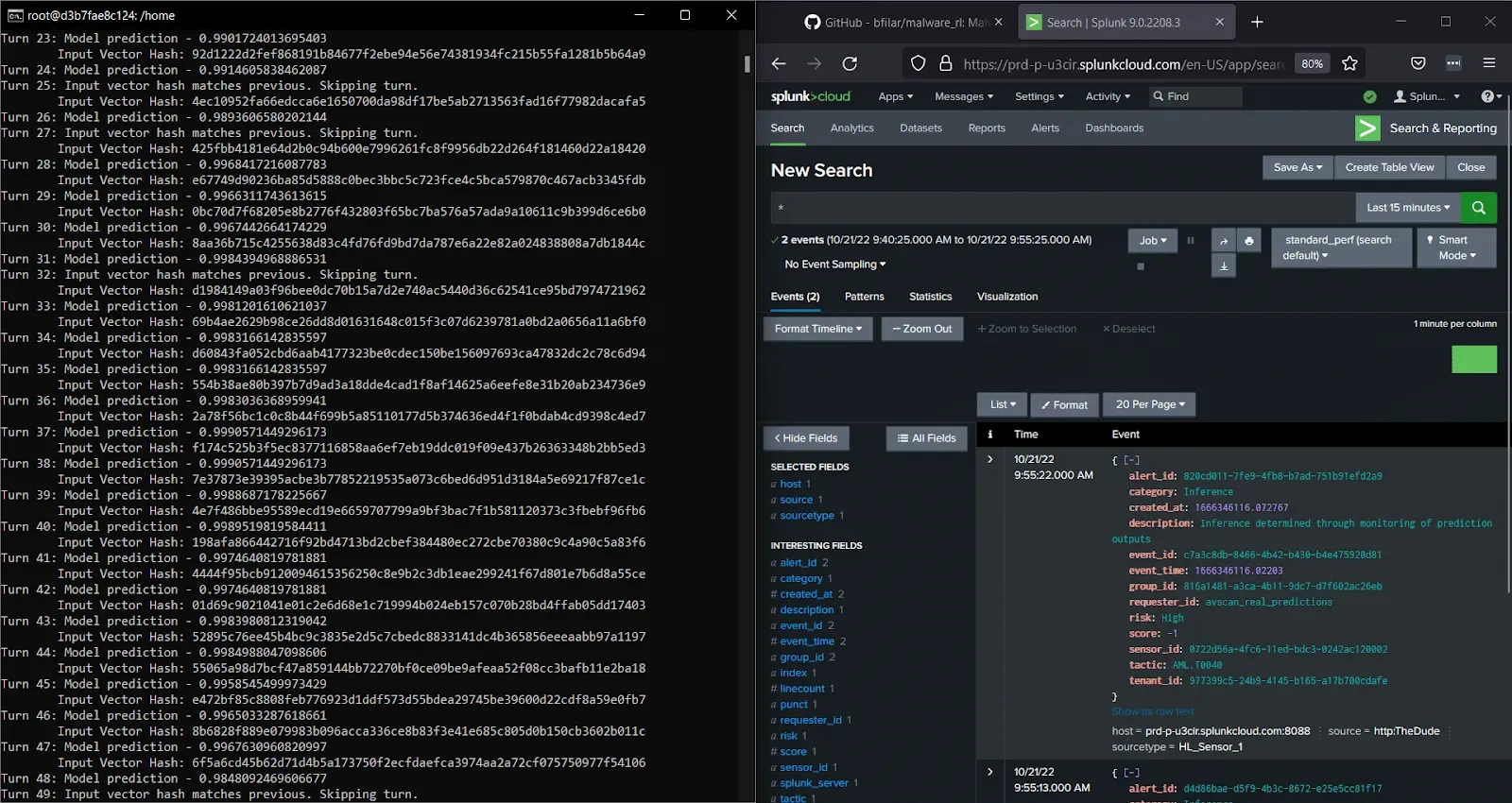
Source: HiddenLayer
Enterprise Security Platforms with Agentic AI Coverage
5. Palo Alto Networks Prisma AIRS

Best for: Consolidating AI security inside a Palo Alto Networks estate
Strengths: Discovery, posture, red teaming, runtime, and AI Gateway
Things to consider: Some modules are early stage; credit-based licensing
Prisma AIRS organizes AI security into three stages: discover shadow AI, assess new risks, and protect against threats at runtime. The platform covers AI agents, applications, models, and data from development through deployment, and its modules can be adopted individually or together.
Agent coverage runs through two components. Agent Security verifies each agent identity and enforces real-time controls to stop unauthorized actions as deployments move from pilot to production. The AI Gateway acts as a control plane for enterprise AI activity, governing and securing how applications and agents reach models and services.
Deployment modes include Network Intercept and API Intercept, and a managed AI Runtime Security option removes the setup work for containers, applications, and cloud infrastructure.
Key features include:
- Agent Security: Verifies every agent identity and enforces real-time controls over agent actions, with defenses against prompt injection, tool misuse, and memory manipulation.
- AI Gateway: Serves as the enterprise AI control plane, discovering, governing, and securing AI activity across applications, agents, models, and services.
- AI Runtime Security: Monitors AI behavior during live interactions and enforces safeguards against manipulation, data exposure, and unsafe actions, with a managed option available.
- AI Red Teaming: Simulates real-world attacks continuously against AI agents and applications, including multi-turn attacks, multi-agent systems, and agentic target profiling.
- AI Model Security: Scans third-party models for tampering, malicious scripts, and deserialization attacks before they are adopted.
- AI Posture Management: Covers the data used for training and inference, the integrity of agents and applications, and access to deployed models.
- Discovery and reporting: Provides visibility into every AI agent, app, and model and how they connect, including endpoint and browser-based agents, plus API violation views and threat snippets in reporting.
Criterion Solution Fit Key Considerations Agent and AI discovery Discovers shadow AI and inventories every AI agent, app, and model, mapping how they connect across cloud, SaaS, endpoint, and browser environments. Deepest value comes when other Palo Alto Networks products are already in place. Identity and least-privilege access control Agent Security verifies each agent identity and enforces real-time controls to stop unauthorized actions at production scale. Agent identity governance is newer than the model and runtime modules. Runtime enforcement at the tool and API layer AI Runtime Security enforces safeguards during live interactions, and the AI Gateway governs agent access to models and services. Network Intercept and API Intercept are both supported. Reviewers describe some features as early stage, with a learning curve to use them well. Visibility, audit logging, and compliance evidence AI Posture Management covers data, agent and app integrity, and model access, with API violation views and threat snippets in reporting. Reviewers report alerts and reports need extra tuning to fit a specific environment. Deployment model and enterprise scale Managed AI Runtime Security reduces deployment friction, and the platform secures containers, multicloud environments, and high-throughput systems. Credit and token-based licensing makes cost forecasting harder at variable volumes.
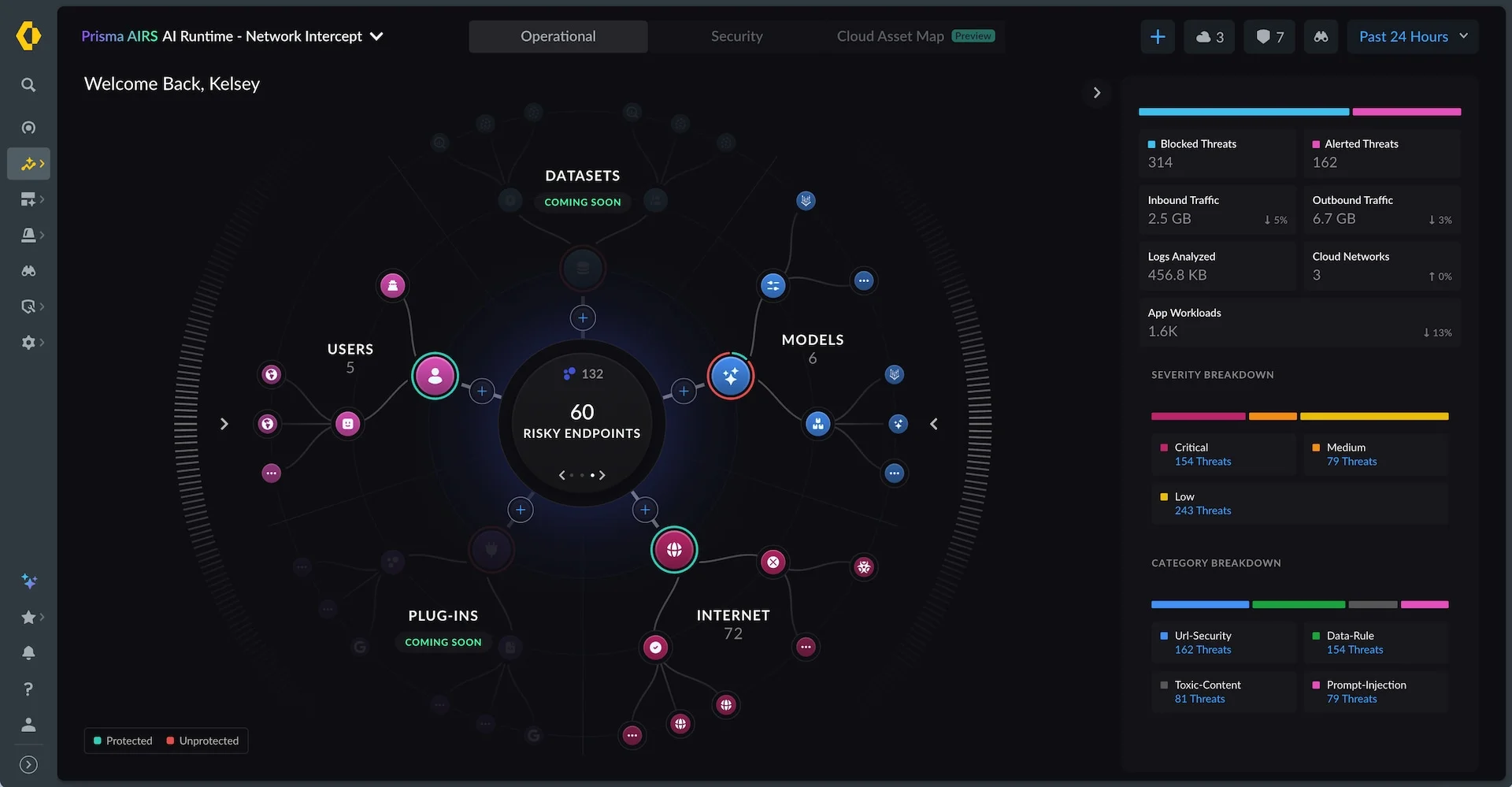
Source: Palo Alto Networks
6. Cisco AI Defense

Best for: Network-level AI enforcement in Cisco-run environments
Strengths: Agentless guardrails, MCP scanning, Talos threat intelligence
Things to consider: Documentation reported as hard to navigate
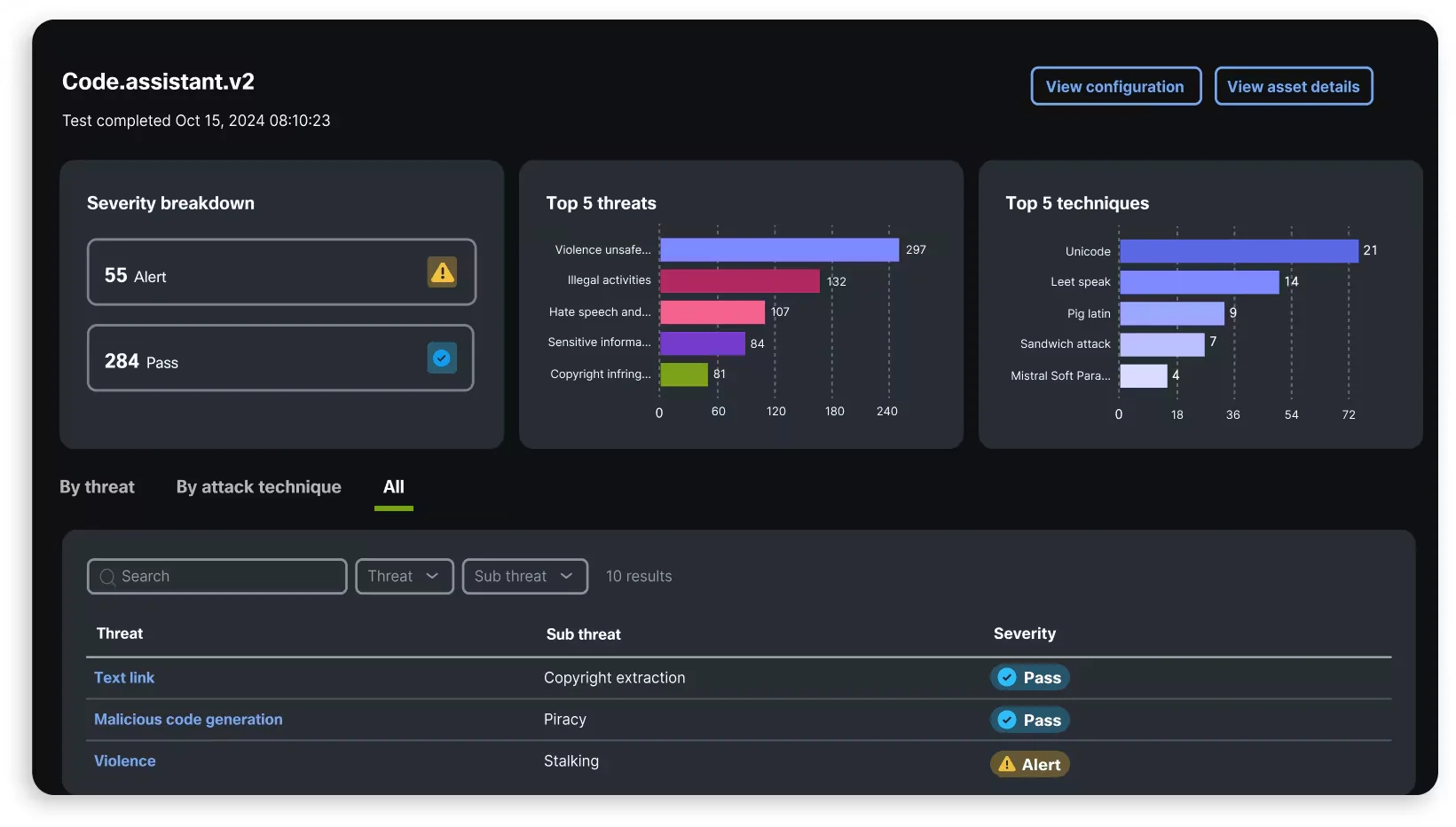
Cisco AI Defense covers two paths: organizations using third-party AI applications, and organizations developing their own AI applications and agents. Both run through the same discover, detect, and protect sequence.
The distinguishing choice is where enforcement lives. Cisco applies AI security at the network level, without agents or libraries in the application, which separates AI development from the security controls around it. That same network position provides visibility into AI traffic across distributed environments.
Agentic coverage extends to the Model Context Protocol. The platform scans MCP servers for compromised or malicious assets, enforces runtime protections across MCP requests and responses, and detects agent-specific threats including memory poisoning, tool misuse, privilege escalation, intent hijacking, and deceptive agent behavior.
Key features include:
- AI Runtime Protection: Embeds guardrails in the network to block adversarial attacks and harmful responses in real time, covering prompt injection, model denial of service, code detection, and off-topic attacks.
- AI Model and Application Validation: Uses algorithmic red teaming to identify safety and security vulnerabilities across models at scale, with results returned in seconds.
- AI Cloud Visibility: Inventories AI models and connected data sources across distributed environments to show usage and gauge risk.
- AI Access: Surfaces third-party AI applications in use across the organization and enforces policies that manage employee access and limit sensitive data exposure.
- AI Supply Chain Risk Management: Identifies malicious code, poisoned data, unsafe tools, compromised components, and high-risk MCP assets using Cisco threat intelligence and proprietary scanning.
- Standards alignment: A single integration maps to NIST, MITRE ATLAS, and the OWASP LLM Top 10, with a published AI safety and security taxonomy.
- Threat intelligence and Explorer Edition: Detections are informed by Cisco's AI research lab and Talos, and a self-service Explorer Edition provides red teaming for agentic workflows and model testing.
Criterion Solution Fit Key Considerations Agent and AI discovery AI Cloud Visibility inventories AI workloads, applications, models, data, and users across distributed cloud environments. AI Access surfaces third-party AI applications in use. Discovery relies on network-level visibility, so activity outside Cisco's path is harder to see. Identity and least-privilege access control AI Access monitors and manages access to third-party AI applications and enforces policies on that access. Agent identity itself is handled by Duo and Cisco Identity Intelligence rather than by AI Defense. Runtime enforcement at the tool and API layer Guardrails embedded in the network block adversarial attacks in real time. MCP requests and responses are protected, and agent threats such as memory poisoning, tool misuse, and privilege escalation are detected. Reviewers report the features are powerful but hard to understand how to use correctly. Visibility, audit logging, and compliance evidence A single management plane covers all AI, with Cisco Security Cloud integration and alignment to NIST, MITRE ATLAS, and the OWASP LLM Top 10. Reviewers describe documentation as difficult to navigate. Deployment model and enterprise scale Enforcement runs at the network level with no agents or libraries to install, integrating with Cisco Security Cloud and Splunk data. Value depends on already running Cisco network and security infrastructure.
Source: Cisco
7. CrowdStrike Falcon Guardian
Best for: Securing endpoint and computer-use agents at execution
Strengths: Shadow AI discovery tied to existing Falcon endpoint telemetry
Things to consider: AI gateway capability announced but not yet available
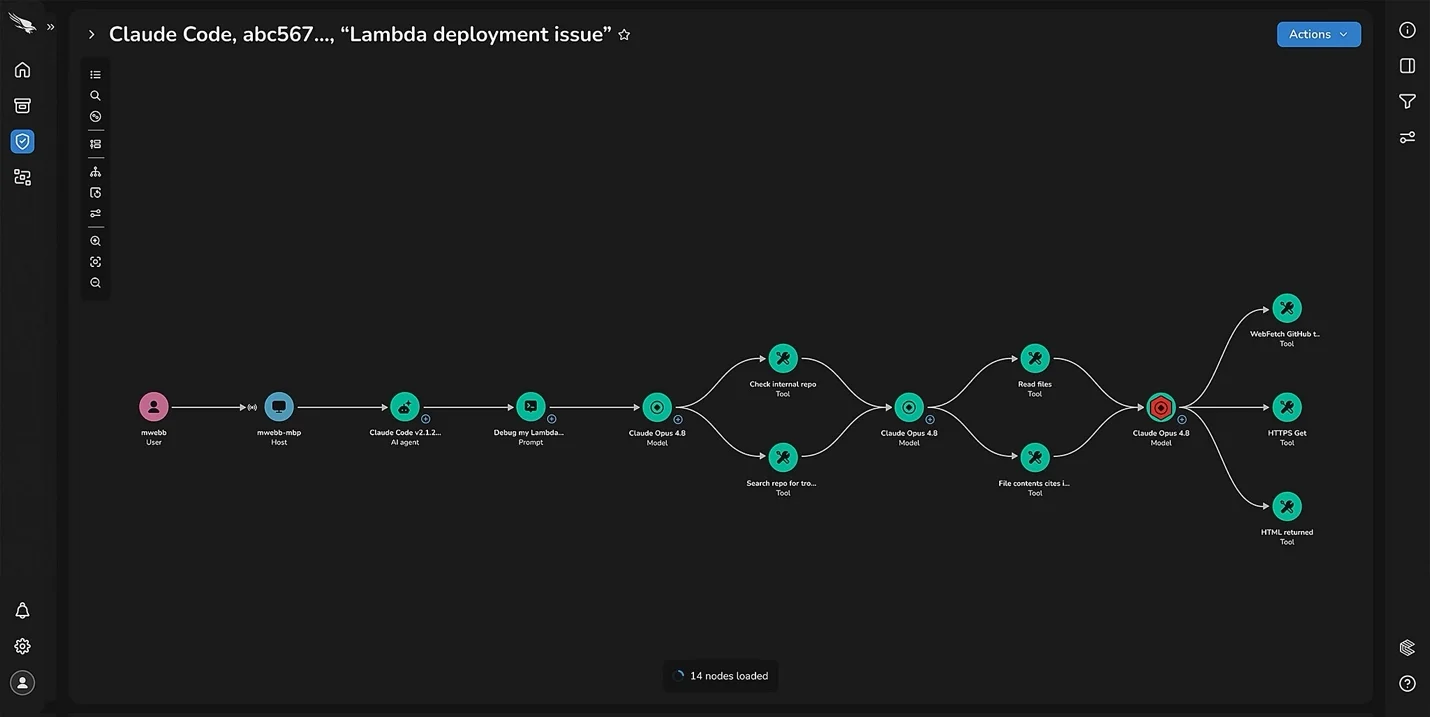
Falcon Guardian applies AI detection and response at the point where agents execute. The argument behind it is that computer-use agents reach identities, data, files, browsers, shells, and system settings while acting with user permissions, so behavior at the endpoint is indistinguishable from legitimate user activity unless the AI context is attached to it.
The product connects agent activity to endpoint telemetry, tracing how a user prompt leads to downstream processes and system actions. It runs on the same Falcon sensor that CrowdStrike already deploys for endpoint protection, so no separate agent is required where Falcon is in place.
Coverage extends beyond endpoints to cloud and SaaS environments, and includes both workforce use of AI tools and homegrown agents and workloads.
Key features include:
- Shadow AI discovery: Identifies workforce AI use and endpoint agents, showing what is in use, who is using it, token consumption, and where unmanaged risk exists.
- Prompt-to-action tracing: Connects agent activity with endpoint telemetry to establish how a prompt led to specific processes and system actions.
- AI usage and access governance: Turns governance policy into enforceable controls over how users interact with AI tools and which AI agents are permitted to run.
- Prompt injection detection: Inspects AI interactions at runtime for direct and indirect prompt injection spanning more than 200 techniques, blocking malicious interactions before they manipulate an agent.
- Sensitive data controls: Identifies sensitive data in AI interactions and applies runtime controls to redact, encrypt, or block it before exposure.
- Runtime containment: Detects compromised agents, reconstructs what happened, determines blast radius across affected agents and systems, and deploys containment actions.
- SIEM integration: AI telemetry is brought together with endpoint, identity, cloud, SaaS, and third-party data in Falcon Next-Gen SIEM for unified detection and investigation.
Criterion Solution Fit Key Considerations Agent and AI discovery Discovers shadow AI agents on endpoints and across cloud and SaaS, showing what is running, who uses it, and token consumption. Coverage is anchored to managed endpoints, so unmanaged hosts fall outside scope. Identity and least-privilege access control Governs how users interact with AI tools and defines which AI agents are permitted to run. Governs permission to run rather than issuing scoped identities and per-tool permissions. Runtime enforcement at the tool and API layer Inspects AI interactions for direct and indirect prompt injection across more than 200 techniques, and deploys containment actions at the point of execution. Published detection and latency figures come from internal benchmarks, so test with your own traffic. Visibility, audit logging, and compliance evidence Traces prompts to downstream processes and system actions, reconstructs incidents, and determines blast radius, with native ingestion into Falcon Next-Gen SIEM. Investigation workflows assume Falcon is already the telemetry backbone. Deployment model and enterprise scale Runs on the existing Falcon sensor, so no separate agent is needed where Falcon is already deployed. The AI gateway capability is announced but not yet available.
Source: CrowdStrike
8. Microsoft Entra Agent ID
Best for: Giving agents managed identities inside the Microsoft estate
Strengths: Conditional Access, lifecycle governance, agent registry
Things to consider: Capabilities gated behind specific licensing tiers
Microsoft Entra Agent ID extends existing identity and access management to AI agents, treating each agent as a first-class identity that can be authenticated, governed, and protected in the same way as an employee account.
The controls are the ones Microsoft-centric security teams already run. Conditional Access evaluates each access attempt, identity governance automates the lifecycle from deployment to expiry, identity protection flags suspicious activity, and network controls log and restrict what agents can reach.
Agent ID capabilities are delivered through Microsoft Agent 365, the control plane for agents. Agent 365 maintains a unified registry covering agents from Microsoft AI platforms, partner agents registered through its SDK, and self-registered agents from platforms it does not manage.
Key features include:
- Agent identities at scale: Every agent receives a built-in identity that enables authentication, policy enforcement, and integration with existing organizational policies.
- Conditional Access for agents: Real-time policies evaluate agent access to resources, block risky agents, and apply granular access controls based on configured security attributes.
- Identity governance: Automates governance from deployment to expiration, assigns and maintains sponsors, and enforces access assignments that are intentional, auditable, and time-bound.
- Identity protection: Detects and flags unusual or unauthorized agent activity, traces agents with compromised tokens, and supports remediation of compromised agents.
- Network controls: Log agent network activity for audits and threat detection, apply web categorization to APIs and MCP servers, restrict file uploads and downloads, and automatically block malicious destinations.
- Unified agent registry: Agent 365 maintains an inventory of the agent fleet with usage insights and visual mapping of agent activity and connections.
- Integrated security stack: Access control and identity protection come from Entra, security posture and threat protection from Defender, and data security and compliance from Purview.
Criterion Solution Fit Key Considerations Agent and AI discovery Agent 365 provides a unified registry covering Microsoft AI platform agents, partner agents via SDK, and self-registered agents, with usage insights and activity mapping. Agents created before Entra agent registration existed cannot be assigned an Agent ID retroactively. Identity and least-privilege access control Each agent gets a first-class identity with Conditional Access, lifecycle governance, assigned sponsors, and time-bound access assignments. Several controls require specific Microsoft 365 licensing tiers before they take effect. Runtime enforcement at the tool and API layer Identity Protection flags unusual agent activity and compromised tokens. Network controls apply web categorization to APIs and MCP servers and block malicious destinations. Enforcement sits at the identity and network layer rather than inspecting individual tool calls. Visibility, audit logging, and compliance evidence Logs agent network activity for audits and threat detection, with Purview covering data security and compliance for agents. Evidence gathering is strongest for agents inside the Microsoft estate. Deployment model and enterprise scale Foundational capabilities come with Microsoft Cloud subscriptions; premium capabilities require an Agent 365 license or Microsoft 365 E7. Third-party agents that do not integrate the Agent 365 SDK remain unmanaged.
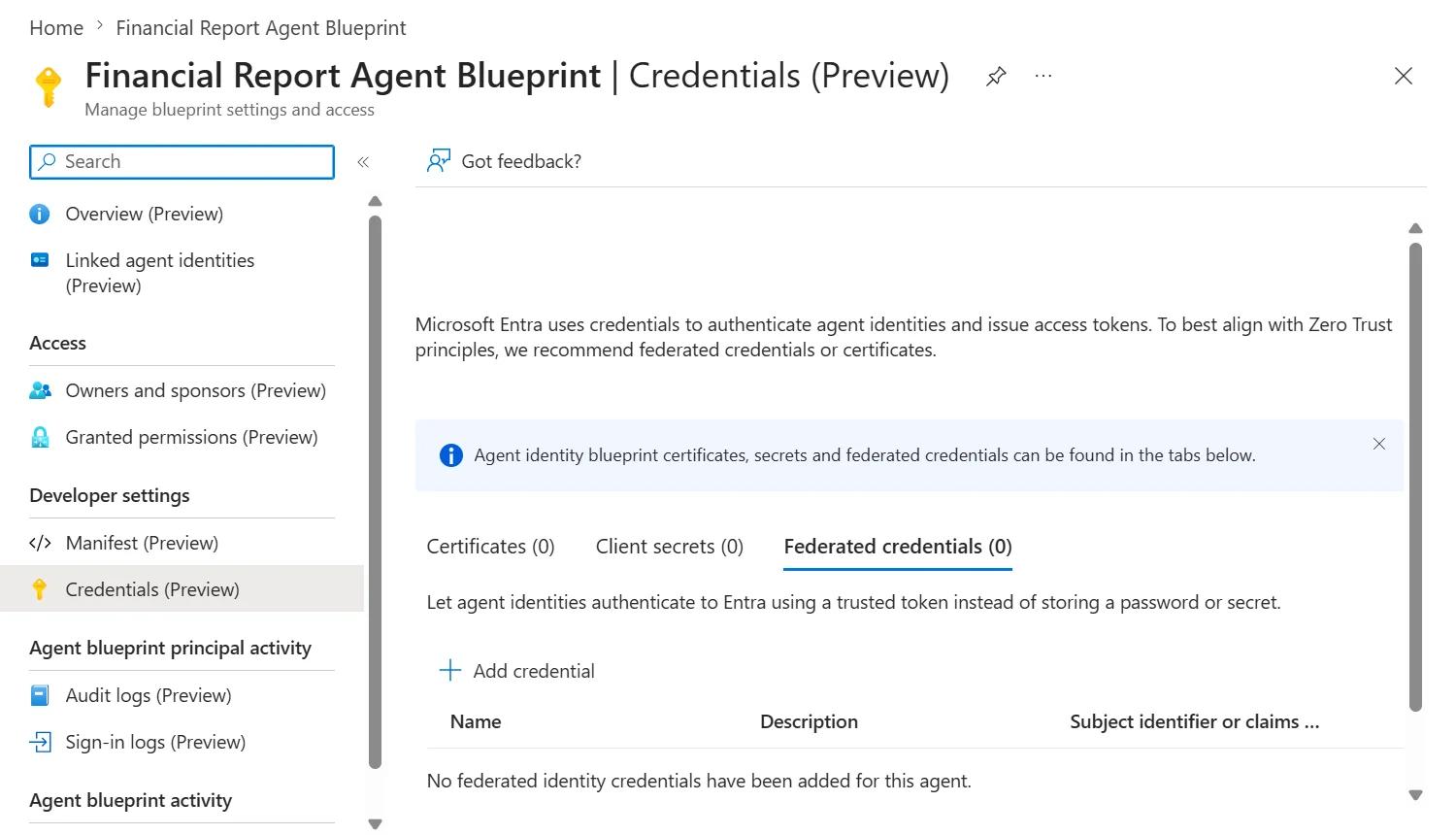
Source: Microsoft
Conclusion
Agentic AI security requires controls that follow agents from discovery and identity through runtime execution and audit. Organizations should evaluate whether a platform can find shadow agents and connected tools, assign or enforce least-privilege access, inspect consequential actions at runtime, and reconstruct activity for investigations and compliance. Deployment architecture also matters because inline controls must provide adequate performance and coverage without creating excessive integration work as agent adoption grows.