The right agentic AI governance solution governs the whole agentic workflow, from the moment an agent appears in the environment to the audit record it leaves behind. Most evaluations stop short of that; teams compare feature lists, run a proof of concept against one use case, and find out months later that a control point they assumed was covered isn't. The 10 questions below will help distinguish the winners from the pretenders.
AI agent governance tools need to cover five control points in every session
Every agent session passes through the same five control points:
- Visibility: establishing that the agent exists, along with the MCP servers and LLM providers it uses.
- Identity: establishing who the agent is and which person answers for it.
- Behavior: determining whether each action, and each sequence of actions, is aligned with the agent's role.
- Enforcement: stopping the agent in real time when its actions don't match that role.
- Operations: proving all of it to auditors, finance, and the SOC.
Vendors market these products as AI gateways, MCP gateways, agent security solutions, and more, and what the product is called doesn’t necessarily help narrow down what it does since the space is evolving so quickly. A useful AI agent security checklist ignores the label and asks what a tool does at each point. Teams that already run an API security program will recognize the order.
Can the solution see every agent, including unsanctioned ones?
- Can it find unsanctioned agents, MCP servers, and LLM providers?
Shadow AI shows up the same way shadow APIs did. A developer connects a coding assistant to a production repository, and security finds out after the fact. A solution should build its inventory from data the organization already collects, such as SIEM and proxy logs, rather than relying on teams to register their agents.
- Does it see MCP tool calls and direct API calls?
Agents reach enterprise systems two ways: through MCP tool calls and through direct calls to APIs. An MCP gateway that inspects only MCP traffic misses every agent that calls an API directly, and agents built on custom frameworks often do. Covering both paths through one control point gives the team one policy set and one audit trail.
Every agent needs a scoped role and an accountable human
- Does it authenticate each agent and attribute its actions to a person?
Shared service accounts make attribution difficult if not impossible. When five agents use the same credential, an investigation can't separate their actions. The solution should authenticate each agent individually, integrate with the existing identity provider through standards such as OAuth 2.1, and tie every action back to the person who deployed or invoked the agent.
- Can it enforce least-privilege access per agent?
An agent built to reconcile invoices doesn't need write access to the CRM. Its permissions should come from what the agent is supposed to do, defined per agent, instead of from the broad permissions of the person who launched it. Ask how the solution defines that scope and whether it updates when the agent's role changes.
Does the solution monitor actions and behavior?
- Does it judge each action against the agent's role?
Identity checks confirm who an agent is; they don't confirm whether the agent's next action fits its job. An agent’s overwhelming desire to please, prompt injection, poisoned tool descriptions, and ordinary misconfiguration can all push an authenticated agent into actions its role never called for. Solutions should evaluate each action in context at runtime, even when the agent's credentials are valid.
- Does it evaluate sequences of calls, not just single requests?
Some of the most damaging agent behavior consists entirely of permitted steps. An agent reads a customer table, summarizes it, and posts the summary to an external channel; each call passes its own check, and together they add up to an unauthorized data export. The same logic applies to sensitive data that leaves a few records at a time across dozens of tool responses. Ask whether the solution tracks behavior across a full session – not just one action at a time – and can redact or block sensitive data in requests and responses.
Enforcement must happen inline and per agent
- Can it contain unauthorized actions and behavior without blocking the agent completely?
A detection that only generates an alert hands the response to a SOC analyst, and agents act faster than an analyst can triage. An agentic AI governance solution should enforce policy inline and act with precision: block the attempted out-of-scope action without blocking the agent completely.
Agent governance must hold up under audit, budget review, and data residency rules
- Does it produce per-agent audit trails the SOC can use?
The security team will ask which agent took an action, who authorized it, and what data it touched. Regulations such as the EU AI Act push organizations toward that kind of record keeping for AI systems. Tool-level and agent-level logs should flow into the SIEM the SOC already uses instead of a separate console the team has to remember to check.
- Does it govern model access and spend?
An agent stuck in a retry loop can consume a month of token budget over a weekend. Model governance belongs in the same agentic AI governance solution as everything else: an allow-list of approved models, routing policies across providers, and token and spend limits tied to specific teams.
- Does it run where the data has to stay?
Teams in financial services, healthcare, and the public sector often can't send agent traffic through a multi-tenant SaaS service. Ask whether the solution supports on-premises and private cloud deployment, whether it scales horizontally without becoming a single point of failure, and whether it separates pre-production testing from live enforcement.
Score each agentic AI governance solution against the full agentic workflow
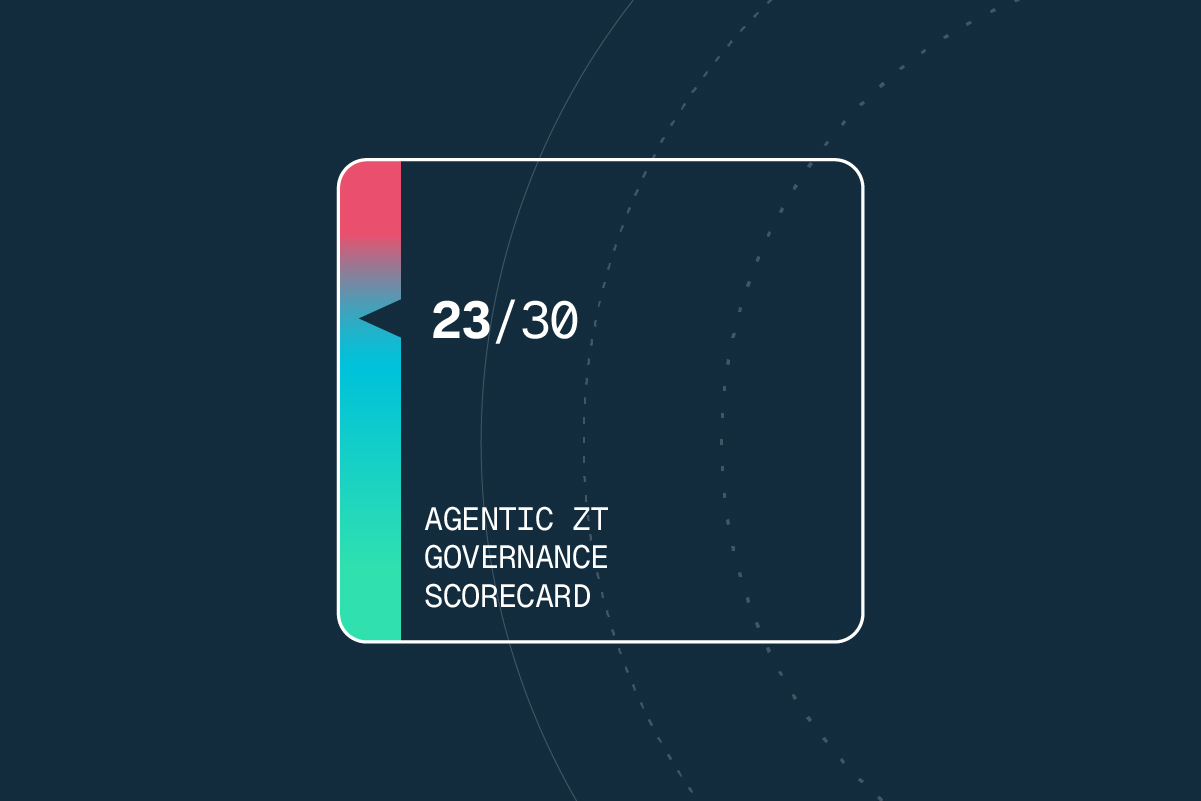
Use the 10 questions to score AI agent governance tools in an RFP or proof of concept, and ask every vendor to show each answer working rather than on a roadmap slide. A solution that answers eight questions well and two with a future release leaves two control points uncovered, and the program will need a second tool for them. Use the AI agent security checklist against the same agents and test cases for every vendor.
How Cequence AI Gateway answers all 10 questions
Cequence AI Gateway is part of the platform Cequence has used to deliver application and API protection for over a decade, and it covers every control point on this list, no matter where the agent is running. AI discovery builds the inventory from existing SIEM logs. The gateway proxies MCP tool calls and direct API calls through the same control point, authenticates each agent through the identity provider the organization already uses, and scopes access with Agent Personas, which turn a plain-English job description into least-privilege permissions.
Behavioral analysis evaluates an agent’s behavior over time, and sensitive data protection ensures data isn’t exfiltrated. Rogue agent containment and inline mitigation policies act inline and tool-level and agent-level audit trails flow into the SIEM. Token and spend limits, model allow-listing, and SaaS or on-premises deployment cover the operational questions. The Cequence approach to agentic AI governance describes how those controls work together.